Embarking on a cloud migration journey can feel like navigating uncharted waters. This comprehensive guide illuminates the path, providing a clear understanding of cloud migration services, from initial planning and execution to post-migration optimization and ongoing maintenance. We’ll explore various migration strategies, address potential challenges, and highlight best practices to ensure a smooth and successful transition to the cloud.
This detailed exploration will empower you to make informed decisions and confidently navigate the complexities of cloud migration.
We’ll delve into the different types of cloud services (IaaS, PaaS, SaaS), examine the advantages and disadvantages of various migration approaches (rehosting, replatforming, refactoring), and discuss crucial aspects like data migration strategies, security considerations, and cost optimization. Real-world case studies will provide valuable insights and demonstrate how organizations have successfully leveraged cloud migration to achieve their business objectives.
Post-Migration Optimization
Successfully migrating to the cloud is only half the battle. Post-migration optimization is crucial for realizing the full potential of your cloud investment, ensuring both performance and cost-effectiveness. This phase involves fine-tuning your cloud environment to maximize efficiency and minimize operational overhead. By proactively addressing optimization strategies, you can significantly reduce costs and improve the overall performance of your applications and infrastructure.Optimizing cloud resources after migration requires a multifaceted approach.
It involves analyzing resource utilization, identifying areas for improvement, and implementing changes to enhance efficiency. This isn’t a one-time task; it’s an ongoing process requiring consistent monitoring and adaptation to changing demands. Failure to optimize can lead to wasted resources and higher-than-necessary cloud spending.
Right-Sizing Cloud Resources
Right-sizing involves adjusting the capacity of your cloud resources to match actual usage patterns. Over-provisioning leads to unnecessary expenses, while under-provisioning can impact performance and availability. Analyzing resource utilization metrics like CPU, memory, and storage consumption helps identify instances where resources can be scaled down or up as needed. Tools provided by cloud providers often offer detailed dashboards and reporting features to facilitate this analysis.
For example, Amazon Web Services (AWS) provides detailed cost and usage reports that allow users to identify over-provisioned instances and optimize accordingly. Microsoft Azure provides similar tools, offering granular visibility into resource utilization and helping users identify opportunities for cost savings through right-sizing.
Cost Optimization Strategies
Effective cost optimization requires a proactive and strategic approach. Several key strategies contribute to minimizing cloud expenses. This includes leveraging reserved instances or committed use discounts offered by cloud providers to reduce costs for consistently utilized resources. Another strategy involves utilizing spot instances for less critical workloads, which offer significant cost savings by using spare computing capacity. Regularly reviewing and deleting unused resources, such as idle virtual machines or storage buckets, is also crucial.
Automated tools can be implemented to identify and automatically remove these resources, ensuring that only necessary resources remain active. Finally, exploring cost optimization tools offered by cloud providers can automate the process of identifying and addressing cost inefficiencies.
Ongoing Monitoring and Maintenance
Continuous monitoring is essential for maintaining optimal performance and identifying potential issues before they escalate. This involves setting up alerts for critical metrics such as CPU utilization, network latency, and storage capacity. Regularly reviewing logs and monitoring system health helps proactively address problems and prevent performance degradation. Proactive maintenance, such as patching operating systems and applications, is crucial for security and stability.
Automated patching and updating tools can significantly reduce the administrative burden and ensure that systems are always up-to-date with the latest security fixes. By implementing robust monitoring and maintenance procedures, organizations can minimize downtime and ensure the ongoing reliability of their cloud environment.
Cloud Security and Compliance Management
Maintaining a secure and compliant cloud environment is paramount. This involves implementing strong access controls, regularly updating security configurations, and ensuring compliance with relevant industry regulations. Employing multi-factor authentication (MFA) for all user accounts enhances security significantly. Regularly scanning for vulnerabilities and patching systems promptly is essential to mitigate security risks. Implementing a robust security information and event management (SIEM) system allows for centralized monitoring of security events and facilitates incident response.
Finally, adherence to compliance standards such as HIPAA, PCI DSS, or GDPR, depending on the industry and data handled, is critical for maintaining legal and regulatory compliance. Failing to address security and compliance can result in significant financial and reputational damage.
Cloud Services Overview
Understanding the different types of cloud services is crucial for effective cloud migration and management. This section provides a detailed overview of Infrastructure as a Service (IaaS), Platform as a Service (PaaS), and Software as a Service (SaaS), highlighting their key features, benefits, and popular providers.
IaaS, PaaS, and SaaS: A Comparison
Cloud services are broadly categorized into three main models: IaaS, PaaS, and SaaS. Each model offers a different level of abstraction and control, catering to varying needs and technical expertise. IaaS provides the most control, offering fundamental computing resources, while SaaS offers the least control, providing ready-to-use applications. PaaS sits in between, offering a platform for application development and deployment.
Infrastructure as a Service (IaaS)
IaaS provides on-demand access to fundamental computing resources, including virtual machines (VMs), storage, and networking. Users have significant control over the underlying infrastructure, allowing for customization and optimization. Popular IaaS providers include Amazon Web Services (AWS) with its Elastic Compute Cloud (EC2), Microsoft Azure with its Virtual Machines, and Google Cloud Platform (GCP) with its Compute Engine. These providers offer a range of VM sizes, storage options (e.g., block storage, object storage), and networking capabilities to suit diverse workloads.
The benefit of IaaS lies in its flexibility and scalability; resources can be easily scaled up or down based on demand, minimizing costs and maximizing efficiency. However, IaaS requires more technical expertise to manage and maintain the infrastructure.
Platform as a Service (PaaS)
PaaS provides a platform for developing, deploying, and managing applications without the need to manage the underlying infrastructure. This simplifies the development process, allowing developers to focus on building applications rather than managing servers and operating systems. Examples of PaaS offerings include AWS Elastic Beanstalk, Microsoft Azure App Service, and Google Cloud Platform App Engine. These platforms often include features such as databases, application servers, and development tools.
The primary benefit of PaaS is its ease of use and reduced management overhead. However, it offers less control over the underlying infrastructure compared to IaaS.
Software as a Service (SaaS)
SaaS provides ready-to-use applications accessed over the internet. Users do not need to manage any infrastructure or platform; they simply subscribe to the service and use the application. Popular SaaS examples include Salesforce, Microsoft Office 365, and Google Workspace. These services offer a wide range of applications, from CRM and email to productivity suites and collaboration tools.
The main advantage of SaaS is its ease of use and low maintenance; users simply access the application through a web browser or mobile app. However, it offers the least control and customization compared to IaaS and PaaS.
Cloud Service Relationships
+-----------------+     +-----------------+     +-----------------+
|     IaaS        |---->|     PaaS        |---->|     SaaS        |
+-----------------+     +-----------------+     +-----------------+
|  (Compute,      |     |  (Platform,     |     |  (Applications) |
|   Storage,      |     |   Services)     |     |                 |
|   Networking)   |     |                 |     |                 |
+-----------------+     +-----------------+     +-----------------+
This diagram illustrates how SaaS applications often run on PaaS platforms, which in turn rely on IaaS for their underlying infrastructure.
This layered approach allows for flexibility and scalability across different cloud service models.
Security Considerations in Cloud Migration
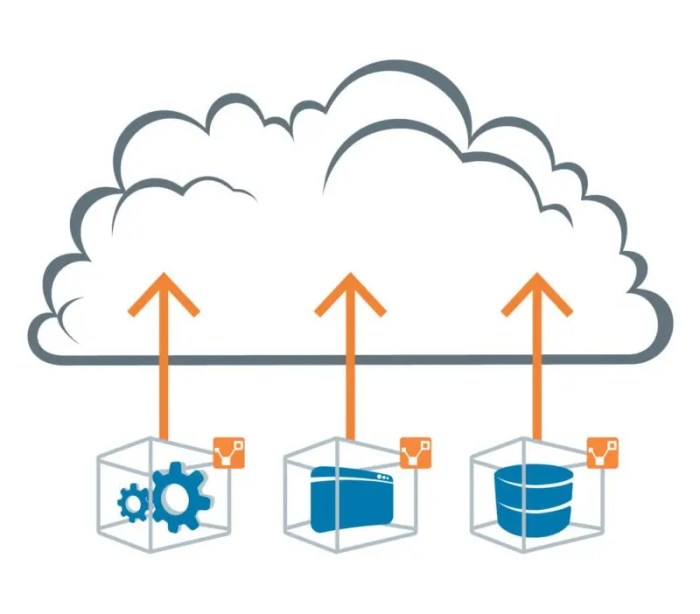
Migrating to the cloud introduces a new set of security challenges. While cloud providers offer robust security infrastructure, the responsibility for data security ultimately rests with the organization. Understanding and mitigating these risks is crucial for a successful and secure cloud migration.
Security risks associated with cloud migration are multifaceted and require a proactive approach. Failing to adequately address these concerns can lead to data breaches, compliance violations, and significant financial losses. A comprehensive security strategy must be implemented throughout the entire migration process, from planning and assessment to post-migration monitoring.
Common Security Risks Associated with Cloud Migration
Data breaches, unauthorized access, and misconfigurations are among the most prevalent security risks during cloud migration. Insufficient access control, lack of encryption, and inadequate vulnerability management increase the likelihood of these incidents. For example, a company migrating sensitive customer data without proper encryption could expose this information to malicious actors. Similarly, failing to properly configure cloud security groups can inadvertently open up systems to unauthorized access.
Best Practices for Securing Data and Applications in the Cloud
Implementing robust security measures is paramount. This includes employing strong authentication methods like multi-factor authentication (MFA), encrypting data both in transit and at rest, and regularly patching and updating systems to address known vulnerabilities. Regular security audits and penetration testing can identify and mitigate potential weaknesses before they are exploited. For instance, regularly scanning for vulnerabilities using automated tools can help proactively identify and address potential security gaps.
Employing a zero-trust security model, which assumes no implicit trust, can further enhance security by verifying every access request regardless of its origin.
The Role of Compliance Standards in Cloud Migration
Compliance with relevant industry regulations and standards is crucial. Organizations must ensure their cloud environment adheres to standards like GDPR, HIPAA, PCI DSS, and others, depending on the industry and the type of data being processed. Non-compliance can result in hefty fines and reputational damage. For example, a healthcare provider migrating patient data to the cloud must ensure compliance with HIPAA regulations, which include strict requirements for data security and privacy.
This necessitates careful planning and implementation of appropriate security controls.
Examples of Security Tools and Technologies Used in Cloud Environments
Various security tools and technologies enhance cloud security. Cloud Access Security Brokers (CASBs) monitor and control access to cloud services, while Security Information and Event Management (SIEM) systems collect and analyze security logs to detect and respond to threats. Intrusion Detection and Prevention Systems (IDPS) provide real-time protection against malicious activity. Cloud Workload Protection Platforms (CWPPs) offer comprehensive security for virtual machines and containers.
These tools, when properly implemented and integrated, create a layered security approach that significantly reduces the risk of security breaches. For instance, a SIEM system can detect unusual login attempts, alerting security personnel to potential breaches. A CASB can prevent unauthorized access to sensitive data stored in the cloud.
Case Studies of Successful Cloud Migrations

Successful cloud migration isn’t simply about moving data; it’s about strategically transforming IT infrastructure to enhance efficiency, scalability, and cost-effectiveness. Numerous organizations across diverse sectors have reaped significant benefits through well-planned and executed cloud migrations. Examining these successes, alongside learning from past failures, provides invaluable insights for future projects.
Successful cloud migrations often involve a phased approach, thorough planning, and a strong focus on security. Conversely, unsuccessful migrations frequently stem from inadequate planning, a lack of skilled resources, or underestimation of the complexity involved. Understanding these contrasting experiences offers critical lessons for organizations contemplating their own cloud journeys.
Retail Giant’s Omnichannel Transformation
A major global retailer successfully migrated its entire e-commerce platform to a cloud-based infrastructure. This involved migrating petabytes of data, encompassing product catalogs, customer information, and transactional records. The migration resulted in a significant improvement in website performance, enabling the retailer to handle peak demand during holiday seasons without experiencing service disruptions. Furthermore, the cloud-based infrastructure provided greater scalability, allowing the retailer to quickly adapt to changing market demands and launch new features and services.
This project highlights the potential for cloud migration to drive significant improvements in customer experience and business agility.
Financial Institution’s Enhanced Security Posture
A large financial institution migrated its core banking systems to a secure cloud environment. This migration involved implementing robust security measures, including encryption, access controls, and regular security audits. The cloud provider’s inherent security features, combined with the institution’s proactive security measures, significantly enhanced the organization’s overall security posture. This initiative showcases how cloud migration can improve security by leveraging advanced security tools and expertise offered by cloud providers.
The migration also enabled the institution to meet stringent regulatory compliance requirements more efficiently.
Healthcare Provider’s Improved Data Management
A large healthcare provider migrated its electronic health record (EHR) system to the cloud. This enabled the provider to improve data accessibility for its clinicians, enhance data security, and reduce IT infrastructure costs. The cloud-based EHR system also facilitated better data analytics, allowing the provider to gain valuable insights into patient care and improve operational efficiency. This case study demonstrates the transformative potential of cloud migration in the healthcare industry, particularly in improving patient care and operational efficiency.
Key Factors Contributing to Successful Cloud Migrations
Understanding the crucial elements that underpin successful cloud migrations is paramount. These factors, when effectively implemented, significantly increase the likelihood of a smooth and beneficial transition.
- Thorough Planning and Assessment: A comprehensive assessment of existing infrastructure, application dependencies, and business requirements is essential. This forms the foundation for a detailed migration plan.
- Phased Approach: Migrating in phases, rather than attempting a “big bang” approach, minimizes disruption and allows for iterative learning and adjustments.
- Skilled Resources and Expertise: Having a team with the necessary cloud expertise, including architects, engineers, and security specialists, is critical for success.
- Robust Security Measures: Implementing strong security protocols throughout the migration process is vital to protect sensitive data.
- Comprehensive Testing and Validation: Thorough testing of applications and infrastructure in the cloud environment is essential to ensure functionality and performance.
- Effective Change Management: Communicating the migration plan and providing training to staff are crucial for minimizing disruption and ensuring buy-in.
- Continuous Monitoring and Optimization: Post-migration monitoring and optimization are essential to ensure ongoing performance and cost efficiency.
Applying Lessons Learned to Future Projects
The lessons gleaned from both successful and unsuccessful cloud migrations can be effectively applied to future initiatives. By carefully analyzing past experiences, organizations can identify potential pitfalls and develop mitigation strategies. For instance, prioritizing thorough planning and risk assessment, investing in skilled resources, and adopting a phased approach significantly reduces the likelihood of encountering major challenges. Furthermore, establishing clear communication channels and incorporating robust monitoring and optimization strategies ensures a smoother and more successful cloud migration.
A proactive approach, informed by previous experiences, greatly enhances the probability of a positive outcome.
Successfully migrating to the cloud requires careful planning, meticulous execution, and ongoing attention to optimization and security. This guide has provided a roadmap to navigate this complex process, equipping you with the knowledge and strategies necessary for a smooth and efficient transition. By understanding the various approaches, potential challenges, and best practices, you can confidently leverage the cloud’s power to enhance your organization’s efficiency, scalability, and resilience.
Remember, a successful cloud migration is an ongoing process, requiring continuous monitoring, optimization, and adaptation to evolving needs.
Clarifying Questions
What is the cost of cloud migration services?
The cost varies greatly depending on factors like the size of your infrastructure, the complexity of your applications, the chosen cloud provider, and the migration strategy employed. It’s best to obtain quotes from multiple providers.
How long does a cloud migration take?
Migration timelines vary significantly depending on the size and complexity of the project. Smaller migrations might take weeks, while larger, more complex migrations can take months or even longer.
What happens to my data during a cloud migration?
Data migration is a critical aspect, requiring a well-defined strategy to ensure data integrity and security. Methods range from simple data transfers to more complex processes involving data transformation and validation.
What if my cloud migration fails?
A robust rollback plan is essential. This plan should detail how to revert to your on-premise infrastructure in case of unexpected issues during the migration.