Cloud Migration Services A Comprehensive Guide

Migration cloud application services security

Embarking on a cloud migration journey can feel like navigating uncharted waters. This comprehensive guide illuminates the path, providing a clear understanding of cloud migration services, from initial planning and execution to post-migration optimization and ongoing maintenance. We’ll explore various migration strategies, address potential challenges, and highlight best practices to ensure a smooth and successful transition to the cloud.

This detailed exploration will empower you to make informed decisions and confidently navigate the complexities of cloud migration.

We’ll delve into the different types of cloud services (IaaS, PaaS, SaaS), examine the advantages and disadvantages of various migration approaches (rehosting, replatforming, refactoring), and discuss crucial aspects like data migration strategies, security considerations, and cost optimization. Real-world case studies will provide valuable insights and demonstrate how organizations have successfully leveraged cloud migration to achieve their business objectives.

Post-Migration Optimization

Successfully migrating to the cloud is only half the battle. Post-migration optimization is crucial for realizing the full potential of your cloud investment, ensuring both performance and cost-effectiveness. This phase involves fine-tuning your cloud environment to maximize efficiency and minimize operational overhead. By proactively addressing optimization strategies, you can significantly reduce costs and improve the overall performance of your applications and infrastructure.Optimizing cloud resources after migration requires a multifaceted approach.

It involves analyzing resource utilization, identifying areas for improvement, and implementing changes to enhance efficiency. This isn’t a one-time task; it’s an ongoing process requiring consistent monitoring and adaptation to changing demands. Failure to optimize can lead to wasted resources and higher-than-necessary cloud spending.

Right-Sizing Cloud Resources

Right-sizing involves adjusting the capacity of your cloud resources to match actual usage patterns. Over-provisioning leads to unnecessary expenses, while under-provisioning can impact performance and availability. Analyzing resource utilization metrics like CPU, memory, and storage consumption helps identify instances where resources can be scaled down or up as needed. Tools provided by cloud providers often offer detailed dashboards and reporting features to facilitate this analysis.

For example, Amazon Web Services (AWS) provides detailed cost and usage reports that allow users to identify over-provisioned instances and optimize accordingly. Microsoft Azure provides similar tools, offering granular visibility into resource utilization and helping users identify opportunities for cost savings through right-sizing.

Cost Optimization Strategies

Effective cost optimization requires a proactive and strategic approach. Several key strategies contribute to minimizing cloud expenses. This includes leveraging reserved instances or committed use discounts offered by cloud providers to reduce costs for consistently utilized resources. Another strategy involves utilizing spot instances for less critical workloads, which offer significant cost savings by using spare computing capacity. Regularly reviewing and deleting unused resources, such as idle virtual machines or storage buckets, is also crucial.

Automated tools can be implemented to identify and automatically remove these resources, ensuring that only necessary resources remain active. Finally, exploring cost optimization tools offered by cloud providers can automate the process of identifying and addressing cost inefficiencies.

Ongoing Monitoring and Maintenance

Continuous monitoring is essential for maintaining optimal performance and identifying potential issues before they escalate. This involves setting up alerts for critical metrics such as CPU utilization, network latency, and storage capacity. Regularly reviewing logs and monitoring system health helps proactively address problems and prevent performance degradation. Proactive maintenance, such as patching operating systems and applications, is crucial for security and stability.

Automated patching and updating tools can significantly reduce the administrative burden and ensure that systems are always up-to-date with the latest security fixes. By implementing robust monitoring and maintenance procedures, organizations can minimize downtime and ensure the ongoing reliability of their cloud environment.

Cloud Security and Compliance Management

Maintaining a secure and compliant cloud environment is paramount. This involves implementing strong access controls, regularly updating security configurations, and ensuring compliance with relevant industry regulations. Employing multi-factor authentication (MFA) for all user accounts enhances security significantly. Regularly scanning for vulnerabilities and patching systems promptly is essential to mitigate security risks. Implementing a robust security information and event management (SIEM) system allows for centralized monitoring of security events and facilitates incident response.

Finally, adherence to compliance standards such as HIPAA, PCI DSS, or GDPR, depending on the industry and data handled, is critical for maintaining legal and regulatory compliance. Failing to address security and compliance can result in significant financial and reputational damage.

Cloud Services Overview

Understanding the different types of cloud services is crucial for effective cloud migration and management. This section provides a detailed overview of Infrastructure as a Service (IaaS), Platform as a Service (PaaS), and Software as a Service (SaaS), highlighting their key features, benefits, and popular providers.

IaaS, PaaS, and SaaS: A Comparison

Cloud services are broadly categorized into three main models: IaaS, PaaS, and SaaS. Each model offers a different level of abstraction and control, catering to varying needs and technical expertise. IaaS provides the most control, offering fundamental computing resources, while SaaS offers the least control, providing ready-to-use applications. PaaS sits in between, offering a platform for application development and deployment.

Infrastructure as a Service (IaaS)

IaaS provides on-demand access to fundamental computing resources, including virtual machines (VMs), storage, and networking. Users have significant control over the underlying infrastructure, allowing for customization and optimization. Popular IaaS providers include Amazon Web Services (AWS) with its Elastic Compute Cloud (EC2), Microsoft Azure with its Virtual Machines, and Google Cloud Platform (GCP) with its Compute Engine. These providers offer a range of VM sizes, storage options (e.g., block storage, object storage), and networking capabilities to suit diverse workloads.

The benefit of IaaS lies in its flexibility and scalability; resources can be easily scaled up or down based on demand, minimizing costs and maximizing efficiency. However, IaaS requires more technical expertise to manage and maintain the infrastructure.

Platform as a Service (PaaS)

PaaS provides a platform for developing, deploying, and managing applications without the need to manage the underlying infrastructure. This simplifies the development process, allowing developers to focus on building applications rather than managing servers and operating systems. Examples of PaaS offerings include AWS Elastic Beanstalk, Microsoft Azure App Service, and Google Cloud Platform App Engine. These platforms often include features such as databases, application servers, and development tools.

The primary benefit of PaaS is its ease of use and reduced management overhead. However, it offers less control over the underlying infrastructure compared to IaaS.

Software as a Service (SaaS)

SaaS provides ready-to-use applications accessed over the internet. Users do not need to manage any infrastructure or platform; they simply subscribe to the service and use the application. Popular SaaS examples include Salesforce, Microsoft Office 365, and Google Workspace. These services offer a wide range of applications, from CRM and email to productivity suites and collaboration tools.

The main advantage of SaaS is its ease of use and low maintenance; users simply access the application through a web browser or mobile app. However, it offers the least control and customization compared to IaaS and PaaS.

Cloud Service Relationships

+-----------------+     +-----------------+     +-----------------+
|     IaaS        |---->|     PaaS        |---->|     SaaS        |
+-----------------+     +-----------------+     +-----------------+
|  (Compute,      |     |  (Platform,     |     |  (Applications) |
|   Storage,      |     |   Services)     |     |                 |
|   Networking)   |     |                 |     |                 |
+-----------------+     +-----------------+     +-----------------+
 

This diagram illustrates how SaaS applications often run on PaaS platforms, which in turn rely on IaaS for their underlying infrastructure.

This layered approach allows for flexibility and scalability across different cloud service models.

Security Considerations in Cloud Migration
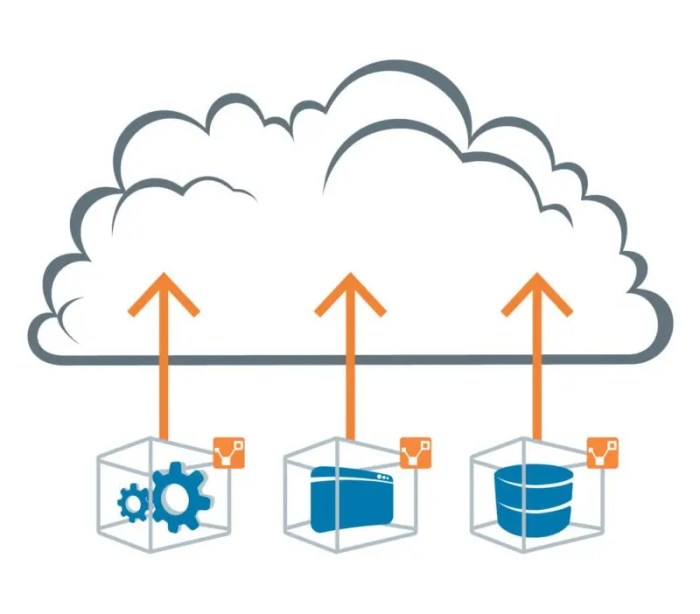
Computing

Migrating to the cloud introduces a new set of security challenges. While cloud providers offer robust security infrastructure, the responsibility for data security ultimately rests with the organization. Understanding and mitigating these risks is crucial for a successful and secure cloud migration.

Security risks associated with cloud migration are multifaceted and require a proactive approach. Failing to adequately address these concerns can lead to data breaches, compliance violations, and significant financial losses. A comprehensive security strategy must be implemented throughout the entire migration process, from planning and assessment to post-migration monitoring.

Common Security Risks Associated with Cloud Migration

Data breaches, unauthorized access, and misconfigurations are among the most prevalent security risks during cloud migration. Insufficient access control, lack of encryption, and inadequate vulnerability management increase the likelihood of these incidents. For example, a company migrating sensitive customer data without proper encryption could expose this information to malicious actors. Similarly, failing to properly configure cloud security groups can inadvertently open up systems to unauthorized access.

Best Practices for Securing Data and Applications in the Cloud

Implementing robust security measures is paramount. This includes employing strong authentication methods like multi-factor authentication (MFA), encrypting data both in transit and at rest, and regularly patching and updating systems to address known vulnerabilities. Regular security audits and penetration testing can identify and mitigate potential weaknesses before they are exploited. For instance, regularly scanning for vulnerabilities using automated tools can help proactively identify and address potential security gaps.

Employing a zero-trust security model, which assumes no implicit trust, can further enhance security by verifying every access request regardless of its origin.

The Role of Compliance Standards in Cloud Migration

Compliance with relevant industry regulations and standards is crucial. Organizations must ensure their cloud environment adheres to standards like GDPR, HIPAA, PCI DSS, and others, depending on the industry and the type of data being processed. Non-compliance can result in hefty fines and reputational damage. For example, a healthcare provider migrating patient data to the cloud must ensure compliance with HIPAA regulations, which include strict requirements for data security and privacy.

This necessitates careful planning and implementation of appropriate security controls.

Examples of Security Tools and Technologies Used in Cloud Environments

Various security tools and technologies enhance cloud security. Cloud Access Security Brokers (CASBs) monitor and control access to cloud services, while Security Information and Event Management (SIEM) systems collect and analyze security logs to detect and respond to threats. Intrusion Detection and Prevention Systems (IDPS) provide real-time protection against malicious activity. Cloud Workload Protection Platforms (CWPPs) offer comprehensive security for virtual machines and containers.

These tools, when properly implemented and integrated, create a layered security approach that significantly reduces the risk of security breaches. For instance, a SIEM system can detect unusual login attempts, alerting security personnel to potential breaches. A CASB can prevent unauthorized access to sensitive data stored in the cloud.

Case Studies of Successful Cloud Migrations

Migration cloud application services security

Successful cloud migration isn’t simply about moving data; it’s about strategically transforming IT infrastructure to enhance efficiency, scalability, and cost-effectiveness. Numerous organizations across diverse sectors have reaped significant benefits through well-planned and executed cloud migrations. Examining these successes, alongside learning from past failures, provides invaluable insights for future projects.

Successful cloud migrations often involve a phased approach, thorough planning, and a strong focus on security. Conversely, unsuccessful migrations frequently stem from inadequate planning, a lack of skilled resources, or underestimation of the complexity involved. Understanding these contrasting experiences offers critical lessons for organizations contemplating their own cloud journeys.

Retail Giant’s Omnichannel Transformation

A major global retailer successfully migrated its entire e-commerce platform to a cloud-based infrastructure. This involved migrating petabytes of data, encompassing product catalogs, customer information, and transactional records. The migration resulted in a significant improvement in website performance, enabling the retailer to handle peak demand during holiday seasons without experiencing service disruptions. Furthermore, the cloud-based infrastructure provided greater scalability, allowing the retailer to quickly adapt to changing market demands and launch new features and services.

This project highlights the potential for cloud migration to drive significant improvements in customer experience and business agility.

Financial Institution’s Enhanced Security Posture

A large financial institution migrated its core banking systems to a secure cloud environment. This migration involved implementing robust security measures, including encryption, access controls, and regular security audits. The cloud provider’s inherent security features, combined with the institution’s proactive security measures, significantly enhanced the organization’s overall security posture. This initiative showcases how cloud migration can improve security by leveraging advanced security tools and expertise offered by cloud providers.

The migration also enabled the institution to meet stringent regulatory compliance requirements more efficiently.

Healthcare Provider’s Improved Data Management

A large healthcare provider migrated its electronic health record (EHR) system to the cloud. This enabled the provider to improve data accessibility for its clinicians, enhance data security, and reduce IT infrastructure costs. The cloud-based EHR system also facilitated better data analytics, allowing the provider to gain valuable insights into patient care and improve operational efficiency. This case study demonstrates the transformative potential of cloud migration in the healthcare industry, particularly in improving patient care and operational efficiency.

Key Factors Contributing to Successful Cloud Migrations

Understanding the crucial elements that underpin successful cloud migrations is paramount. These factors, when effectively implemented, significantly increase the likelihood of a smooth and beneficial transition.

  • Thorough Planning and Assessment: A comprehensive assessment of existing infrastructure, application dependencies, and business requirements is essential. This forms the foundation for a detailed migration plan.
  • Phased Approach: Migrating in phases, rather than attempting a “big bang” approach, minimizes disruption and allows for iterative learning and adjustments.
  • Skilled Resources and Expertise: Having a team with the necessary cloud expertise, including architects, engineers, and security specialists, is critical for success.
  • Robust Security Measures: Implementing strong security protocols throughout the migration process is vital to protect sensitive data.
  • Comprehensive Testing and Validation: Thorough testing of applications and infrastructure in the cloud environment is essential to ensure functionality and performance.
  • Effective Change Management: Communicating the migration plan and providing training to staff are crucial for minimizing disruption and ensuring buy-in.
  • Continuous Monitoring and Optimization: Post-migration monitoring and optimization are essential to ensure ongoing performance and cost efficiency.

Applying Lessons Learned to Future Projects

The lessons gleaned from both successful and unsuccessful cloud migrations can be effectively applied to future initiatives. By carefully analyzing past experiences, organizations can identify potential pitfalls and develop mitigation strategies. For instance, prioritizing thorough planning and risk assessment, investing in skilled resources, and adopting a phased approach significantly reduces the likelihood of encountering major challenges. Furthermore, establishing clear communication channels and incorporating robust monitoring and optimization strategies ensures a smoother and more successful cloud migration.

A proactive approach, informed by previous experiences, greatly enhances the probability of a positive outcome.

Successfully migrating to the cloud requires careful planning, meticulous execution, and ongoing attention to optimization and security. This guide has provided a roadmap to navigate this complex process, equipping you with the knowledge and strategies necessary for a smooth and efficient transition. By understanding the various approaches, potential challenges, and best practices, you can confidently leverage the cloud’s power to enhance your organization’s efficiency, scalability, and resilience.

Remember, a successful cloud migration is an ongoing process, requiring continuous monitoring, optimization, and adaptation to evolving needs.

Clarifying Questions

What is the cost of cloud migration services?

The cost varies greatly depending on factors like the size of your infrastructure, the complexity of your applications, the chosen cloud provider, and the migration strategy employed. It’s best to obtain quotes from multiple providers.

How long does a cloud migration take?

Migration timelines vary significantly depending on the size and complexity of the project. Smaller migrations might take weeks, while larger, more complex migrations can take months or even longer.

What happens to my data during a cloud migration?

Data migration is a critical aspect, requiring a well-defined strategy to ensure data integrity and security. Methods range from simple data transfers to more complex processes involving data transformation and validation.

What if my cloud migration fails?

A robust rollback plan is essential. This plan should detail how to revert to your on-premise infrastructure in case of unexpected issues during the migration.

Multi-Cloud Strategies for Businesses

Cloud management multi implement diagram managing effectively

In today’s dynamic business landscape, leveraging cloud technology is no longer optional; it’s essential. However, relying solely on a single cloud provider exposes businesses to significant risks. Multi-cloud strategies offer a powerful alternative, distributing workloads and mitigating dependencies for enhanced resilience, flexibility, and cost optimization. This exploration delves into the complexities and rewards of implementing a multi-cloud approach, providing a practical guide for businesses of all sizes.

This guide will navigate you through the key considerations involved in designing, implementing, and managing a successful multi-cloud strategy. We will examine the benefits and drawbacks, explore various cloud providers, discuss data management and security, and provide practical advice on cost optimization and application portability. The goal is to equip you with the knowledge to make informed decisions and build a robust, adaptable, and secure cloud infrastructure.

Defining Multi-Cloud Strategies

Strategy cloud organization multi build

A multi-cloud strategy involves distributing workloads across multiple cloud providers, rather than relying solely on a single platform. This approach offers businesses increased flexibility, resilience, and the ability to leverage the unique strengths of different cloud providers. A well-defined strategy is crucial for realizing these benefits and mitigating potential risks.

Core Principles of Multi-Cloud Strategies

Successful multi-cloud strategies are built on several key principles. Firstly, a clear understanding of business requirements and workload characteristics is essential for determining which workloads are best suited for each cloud environment. Secondly, a robust strategy incorporates comprehensive governance and security measures to ensure data consistency, compliance, and protection across all platforms. Finally, effective management and automation tools are needed to streamline operations and optimize resource utilization across the diverse cloud environments.

Without these core elements, a multi-cloud approach risks becoming complex and unwieldy, negating its potential benefits.

Multi-Cloud Architectures

Several architectural models support multi-cloud deployments. A common approach is the active-active architecture, where workloads are actively running on multiple cloud providers simultaneously. This provides high availability and fault tolerance. Conversely, an active-passive architecture designates a primary cloud provider while keeping a secondary provider for backup or disaster recovery purposes. Another model, multi-cloud with a central control plane, uses a single management platform to orchestrate and monitor workloads across multiple clouds, enhancing visibility and control.

The optimal architecture depends on the specific needs and risk tolerance of the organization.

Benefits and Drawbacks of Multi-Cloud

Adopting a multi-cloud approach offers several advantages. Improved resilience and availability are key benefits, as failure in one cloud provider doesn’t necessarily impact operations. Furthermore, businesses gain access to a broader range of services and technologies, allowing them to select the best solutions for their specific needs. Cost optimization is another potential advantage, as businesses can leverage competitive pricing and avoid vendor lock-in.

However, managing multiple cloud environments can be complex and require specialized skills. Security can also be more challenging, requiring careful coordination of security policies and tools across different platforms. Data consistency and migration between clouds can also present complexities.

Hypothetical Multi-Cloud Strategy for a Small E-commerce Business

This table Artikels a potential multi-cloud strategy for a small e-commerce business, focusing on cost-effectiveness and resilience.

Component Provider Justification Risk Mitigation
Website Hosting & Database AWS (Amazon Web Services) Cost-effective, scalable infrastructure with robust database services (e.g., RDS). Regular backups to S3, disaster recovery plan leveraging AWS’s regions.
Image & Video Storage Google Cloud Storage Cost-effective object storage, strong integration with other Google services if needed later. Redundancy across multiple storage zones, data encryption at rest and in transit.
Customer Relationship Management (CRM) Salesforce (SaaS) Mature, feature-rich CRM platform, readily accessible and manageable. Regular data backups, data encryption, and adherence to Salesforce’s security best practices.
Payment Processing Stripe (SaaS) Secure and reliable payment gateway with wide acceptance. Regular security audits, compliance with PCI DSS standards.

Choosing Cloud Service Providers

Selecting the right cloud service providers (CSPs) is crucial for a successful multi-cloud strategy. The decision isn’t simply about choosing the cheapest option; it requires a thorough understanding of your business needs, workload characteristics, and the strengths and weaknesses of each major provider. This involves careful consideration of factors ranging from pricing models and geographic reach to security compliance and support capabilities.Choosing the right CSPs involves a careful evaluation of their offerings against your specific business requirements.

A multi-cloud approach often necessitates leveraging the unique capabilities of different providers, maximizing efficiency and minimizing reliance on a single vendor.

Comparison of Major Cloud Service Providers

Amazon Web Services (AWS), Microsoft Azure, and Google Cloud Platform (GCP) are the dominant players in the cloud computing market, each offering a comprehensive suite of services. However, their strengths and weaknesses differ significantly. AWS boasts the most extensive service catalog and longest operational history, providing a mature and feature-rich ecosystem. Azure integrates tightly with Microsoft’s existing software and services, making it attractive to businesses heavily invested in the Microsoft ecosystem.

GCP excels in data analytics and machine learning, leveraging Google’s expertise in these areas. AWS may have a steeper learning curve due to its sheer scale, while Azure’s integration with Microsoft products might limit flexibility for organizations using diverse technologies. GCP, while powerful in its niche, might lack the breadth of services found in AWS or Azure in some areas.

Key Factors for Cloud Provider Selection in a Multi-Cloud Environment

Several critical factors influence the selection of cloud providers for a multi-cloud environment. These include:

  • Geographic Coverage and Data Sovereignty: Consider the location of your data centers and users to minimize latency and comply with data residency regulations.
  • Service Portfolio and Compatibility: Evaluate each provider’s services to ensure they meet your specific application requirements and integrate seamlessly with your existing infrastructure.
  • Pricing Models and Cost Optimization: Analyze different pricing models (pay-as-you-go, reserved instances, etc.) to determine the most cost-effective approach for your workloads.
  • Security and Compliance: Assess each provider’s security posture, certifications, and compliance with relevant industry regulations (e.g., HIPAA, GDPR).
  • Support and Service Level Agreements (SLAs): Evaluate the quality of support offered by each provider and the guarantees provided in their SLAs.
  • Vendor Lock-in Mitigation Strategies: Employ strategies to avoid vendor lock-in, such as using open standards and APIs, and adopting cloud-agnostic architectures.

Best Practices for Negotiating Contracts with Multiple Cloud Providers

Negotiating contracts with multiple cloud providers requires a strategic approach. This includes:

  • Develop a Clear Strategy: Define your specific needs and desired outcomes before engaging in negotiations.
  • Comparative Analysis: Compare offers from different providers based on pricing, services, and support.
  • Leverage Volume Discounts: Negotiate volume discounts based on your projected usage across multiple providers.
  • Flexible Contract Terms: Seek flexible contract terms that allow for scaling up or down as your needs change.
  • Clearly Defined SLAs: Ensure that SLAs are clearly defined and measurable.
  • Legal Review: Have legal counsel review all contracts before signing.

Importance of Vendor Lock-in Avoidance in Multi-Cloud Environments

Vendor lock-in represents a significant risk in cloud computing. It occurs when an organization becomes overly reliant on a single provider’s technology and services, making it difficult and expensive to switch providers. In a multi-cloud environment, the risk of vendor lock-in is mitigated by distributing workloads across multiple providers. This reduces dependence on any single vendor and enhances flexibility and resilience.

Strategies for avoiding vendor lock-in include using open standards, leveraging cloud-agnostic tools and architectures, and maintaining portability of applications and data. For example, a company might use AWS for compute, Azure for storage, and GCP for machine learning, reducing reliance on any single platform and improving resilience.

Data Management and Security in a Multi-Cloud Environment

Cloud management multi implement diagram managing effectively

Managing data and ensuring its security across multiple cloud platforms presents unique challenges. A robust strategy requires careful planning and the implementation of consistent security policies and procedures across all chosen environments. This goes beyond simply replicating on-premises security measures; it demands a nuanced understanding of each cloud provider’s specific security features and potential vulnerabilities.Data consistency and security across multiple cloud platforms require a multi-faceted approach.

This involves selecting appropriate data replication and synchronization tools, implementing consistent security policies, and establishing centralized monitoring and logging capabilities. A key consideration is understanding the inherent differences in security models and compliance certifications offered by different cloud providers.

Data Consistency Strategies

Maintaining data consistency across various cloud environments is crucial for operational efficiency and data integrity. Strategies include utilizing cloud-native data replication services, employing database synchronization tools, and implementing data versioning systems. For example, using AWS’s Database Migration Service to replicate data between an on-premises database and an AWS RDS instance, then using Azure’s Data Box to transfer data to an Azure SQL Database for disaster recovery and geographic redundancy.

These tools help ensure that data remains consistent across the various environments. Furthermore, employing a consistent data model across all clouds simplifies data management and reduces the risk of inconsistencies.

Multi-Cloud Security Best Practices

Effective security in a multi-cloud environment necessitates a layered approach. This includes implementing robust access control mechanisms (like multi-factor authentication and role-based access control), leveraging encryption both in transit and at rest, and regularly performing vulnerability assessments and penetration testing. Regular security audits are also critical to maintaining compliance and identifying potential weaknesses. For instance, employing a centralized security information and event management (SIEM) system allows for consolidated logging and monitoring of security events across all cloud environments, providing a unified view of the security posture.

Another best practice is the implementation of a zero trust security model, verifying every access request regardless of its origin.

Incident Response Plan for a Multi-Cloud Data Breach

A well-defined incident response plan is paramount for mitigating the impact of a data breach. The plan should clearly Artikel roles and responsibilities, communication protocols, and escalation procedures.

  • Detection and Analysis: Immediately identify the breach, determine its scope and impact, and isolate affected systems.
  • Containment: Isolate compromised systems to prevent further data exfiltration. This may involve shutting down affected services or restricting network access.
  • Eradication: Remove malware or other malicious code from affected systems. This may involve reinstalling operating systems or restoring from backups.
  • Recovery: Restore systems and data from backups, ensuring data integrity and availability.
  • Post-Incident Activity: Conduct a thorough post-incident review to identify root causes, improve security measures, and update the incident response plan.
  • Notification and Communication: Notify affected parties (customers, regulators) as required by law and company policy.

Implementing Data Encryption and Access Control

Implementing consistent data encryption and access control mechanisms across multiple cloud environments is essential for data protection. This involves leveraging cloud-native encryption services, implementing consistent key management strategies, and enforcing least privilege access control. For instance, utilizing AWS KMS for key management and encryption across AWS services, Azure Key Vault for key management in Azure, and Google Cloud KMS for key management in Google Cloud.

This allows for centralized key management and consistent encryption practices across all platforms. Furthermore, implementing consistent access control policies using role-based access control (RBAC) across all clouds ensures that only authorized users have access to sensitive data. This can be complemented by network segmentation and micro-segmentation strategies to further isolate sensitive resources.

Successfully navigating the multi-cloud landscape requires careful planning, a deep understanding of your business needs, and a commitment to ongoing optimization. By strategically selecting cloud providers, implementing robust security measures, and continuously monitoring performance and costs, businesses can unlock the full potential of a multi-cloud architecture. This approach not only enhances resilience and flexibility but also empowers organizations to innovate faster, respond to market changes more effectively, and ultimately achieve a competitive edge.

FAQ Explained

What are the biggest challenges in implementing a multi-cloud strategy?

Key challenges include managing complexity across multiple platforms, ensuring data consistency and security, optimizing costs effectively, and maintaining consistent application performance.

How do I choose the right cloud providers for my multi-cloud environment?

Consider factors like service offerings, geographic reach, compliance certifications, pricing models, and existing relationships before selecting providers. Align provider strengths with specific application needs.

What is the role of automation in multi-cloud management?

Automation is crucial for streamlining operations, reducing manual effort, and ensuring consistency across multiple cloud environments. It’s vital for tasks like provisioning, deployment, monitoring, and incident response.

How can I ensure data sovereignty and compliance in a multi-cloud environment?

Implement robust data encryption, access control mechanisms, and carefully choose providers that meet your specific regional and regulatory compliance requirements. Maintain a clear understanding of data location and access policies.

Hybrid Cloud Solutions for Enterprises

Aws stonefly

Enterprises today face a complex landscape of data management and application deployment. The rise of cloud computing offers solutions, but choosing the right approach—public, private, or a hybrid—is crucial for success. This exploration of hybrid cloud solutions for enterprises will delve into the benefits, challenges, and best practices for leveraging this powerful model, ultimately empowering businesses to optimize their IT infrastructure and achieve their strategic goals.

Hybrid cloud environments combine the strengths of both public and private clouds, offering flexibility and scalability while maintaining control over sensitive data. This approach allows businesses to strategically allocate workloads based on security needs, cost considerations, and performance requirements, leading to a more efficient and cost-effective IT infrastructure. We’ll examine how various industries benefit from this approach and provide practical guidance for implementation and management.

Defining Hybrid Cloud Solutions for Enterprises

A hybrid cloud solution combines the resources and benefits of both public and private cloud environments, creating a flexible and scalable IT infrastructure tailored to an organization’s specific needs. This approach allows businesses to leverage the strengths of each cloud type, optimizing cost, performance, and security.

Hybrid cloud architectures typically consist of several key components. These include a private cloud, often located on-premises and offering enhanced control and security over sensitive data; a public cloud, such as AWS, Azure, or Google Cloud, providing scalability and cost-effectiveness for less critical workloads; a robust network connecting the private and public clouds, enabling seamless data transfer and application deployment; and management tools that orchestrate and monitor resources across both environments.

Security protocols are also critical, ensuring data integrity and access control regardless of location.

Benefits of Hybrid Cloud for Businesses of Different Sizes

The advantages of a hybrid cloud strategy are numerous and extend across businesses of various sizes. Smaller companies might utilize a hybrid approach to leverage the scalability of a public cloud for peak demand while maintaining sensitive data within a secure private cloud environment on-premises. Larger enterprises often adopt hybrid clouds to consolidate existing on-premises infrastructure with public cloud services, enabling greater agility and cost optimization across their IT landscape.

The flexibility allows them to deploy applications strategically, placing sensitive data and mission-critical applications in the private cloud, while less critical applications can benefit from the cost-effectiveness and scalability of the public cloud.

Comparison of Hybrid Cloud with Public and Private Cloud Deployments

Public clouds, like AWS or Azure, offer readily available resources on a pay-as-you-go basis, providing high scalability and accessibility. However, they may present security and compliance challenges for certain organizations. Private clouds, on the other hand, offer greater control and security, ideal for sensitive data and regulated industries. However, private clouds can be expensive to maintain and lack the inherent scalability of public clouds.

A hybrid cloud approach bridges this gap, allowing businesses to utilize the strengths of both while mitigating their respective weaknesses. It offers a balance between cost, control, and scalability, providing a more tailored solution to specific business needs.

Industries Best Suited for Hybrid Cloud Solutions

Several industries benefit significantly from hybrid cloud deployments. Financial services firms, for example, often utilize hybrid clouds to manage regulatory compliance requirements while maintaining the scalability needed to handle peak transaction volumes. Healthcare organizations might leverage hybrid clouds to store and process patient data securely while utilizing cloud-based analytics for improved research and treatment. Similarly, government agencies frequently adopt hybrid solutions to balance security needs with the need for efficient and scalable IT infrastructure.

Manufacturing companies can use hybrid clouds to connect on-premises equipment and systems with cloud-based analytics and machine learning tools for improved production efficiency and predictive maintenance. These are just a few examples of how hybrid cloud solutions offer a versatile and adaptable approach to modern IT infrastructure across a range of sectors.

Hybrid Cloud Deployment Strategies

Cloud hybrid solutions enterprises indian perfect

Successfully deploying a hybrid cloud solution requires a well-defined strategy tailored to the specific needs of the enterprise. This involves careful consideration of application migration, security protocols, and a phased implementation approach. A robust strategy minimizes disruption and maximizes the benefits of leveraging both on-premises and cloud resources.

Designing a Hybrid Cloud Deployment Strategy for a Medium-Sized Enterprise

Let’s consider a hypothetical medium-sized enterprise, “Acme Corp,” a manufacturing company with on-premises CRM and ERP systems, alongside newer marketing applications already hosted on a public cloud platform. Acme Corp wants to improve scalability, reduce IT infrastructure costs, and enhance data security. A suitable hybrid cloud strategy for Acme Corp would involve gradually migrating their legacy systems to the cloud, maintaining critical data on-premises while leveraging the cloud for scalable applications and disaster recovery.

This phased approach minimizes risk and allows for continuous monitoring and adjustment. Acme Corp could start by migrating less critical applications to the cloud, gaining experience before tackling more complex systems. They would need to carefully evaluate the performance and security implications of each migration step.

Best Practices for Migrating Applications to a Hybrid Cloud Environment

Migrating applications to a hybrid cloud requires a systematic approach. Key best practices include thorough application assessment to determine suitability for cloud migration; choosing the right migration strategy (rehosting, refactoring, re-platforming, repurchase, or retire); implementing robust monitoring and testing throughout the migration process; and establishing clear rollback plans in case of unforeseen issues. For example, applications heavily reliant on on-premises databases might require a phased migration, initially syncing data to the cloud before fully migrating the application.

This minimizes downtime and ensures data consistency. Furthermore, adopting automation tools can significantly streamline the migration process, reducing manual effort and potential errors.

Security Considerations Involved in Hybrid Cloud Deployments

Security is paramount in hybrid cloud deployments. The distributed nature of the environment introduces new challenges, requiring a comprehensive security strategy that addresses both on-premises and cloud security. This involves implementing strong identity and access management (IAM) across all environments; utilizing encryption for data at rest and in transit; establishing a robust security information and event management (SIEM) system for threat detection and response; and regularly conducting security audits and penetration testing to identify vulnerabilities.

Specific security controls will vary based on the sensitivity of the data and the regulatory requirements applicable to the enterprise. For instance, adhering to compliance standards like HIPAA or PCI DSS is crucial depending on the industry and data handled.

Step-by-Step Guide for Implementing a Hybrid Cloud Solution

Implementing a hybrid cloud solution is a multi-stage process. The following table Artikels a typical implementation roadmap:

Step Potential Challenges Mitigation Strategies Example
1. Assessment & Planning Identifying application dependencies, assessing cloud suitability, defining migration strategy. Conduct thorough application inventory, perform cloud readiness assessments, develop detailed migration plans. Analyze existing applications, map dependencies, and create a detailed migration timeline with resource allocation.
2. Infrastructure Setup Setting up networking, security, and storage across both environments. Utilize automation tools, establish secure network connections, implement robust security policies. Configure VPN connections, implement firewalls, and establish secure data transfer protocols.
3. Application Migration Downtime, data loss, application compatibility issues. Phased migration, robust testing, data backup and recovery mechanisms. Migrate non-critical applications first, perform thorough testing in a staging environment, and establish data replication processes.
4. Monitoring & Optimization Performance bottlenecks, security vulnerabilities, cost overruns. Continuous monitoring, performance tuning, regular security audits, cost management tools. Implement performance monitoring dashboards, conduct regular security scans, and analyze cloud spending patterns.

Managing and Monitoring Hybrid Cloud Environments

Effective management and monitoring are crucial for realizing the full potential of a hybrid cloud strategy. Without robust oversight, the complexities inherent in managing resources across multiple environments can lead to performance bottlenecks, security vulnerabilities, and increased operational costs. This section details the tools, KPIs, and strategies essential for maintaining a healthy and efficient hybrid cloud infrastructure.

Tools and Technologies for Managing Hybrid Cloud Infrastructure

Managing a hybrid cloud environment requires a sophisticated approach that goes beyond traditional on-premises management tools. A comprehensive strategy necessitates a combination of tools designed to handle the unique challenges of integrating public and private cloud resources. These tools typically provide centralized visibility, automation capabilities, and security controls across all environments.

Examples of such tools include:

  • Configuration Management Tools (e.g., Ansible, Puppet, Chef): These automate the provisioning and configuration of servers and applications across both on-premises and cloud environments, ensuring consistency and reducing manual errors.
  • Container Orchestration Platforms (e.g., Kubernetes): These manage and automate the deployment, scaling, and management of containerized applications, offering portability and scalability across different cloud platforms.
  • Cloud Management Platforms (e.g., VMware vRealize Cloud Universal, Microsoft Azure Arc): These provide centralized dashboards and control planes for managing resources across hybrid environments, simplifying operations and improving visibility.
  • Monitoring and Logging Tools (e.g., Datadog, Prometheus, Grafana): These tools aggregate logs and metrics from various sources, providing comprehensive visibility into the performance and health of the entire hybrid cloud infrastructure. They are crucial for identifying and resolving issues proactively.
  • Security Information and Event Management (SIEM) Systems (e.g., Splunk, QRadar): These collect and analyze security logs from various sources to detect and respond to security threats across the hybrid environment. A robust SIEM is critical for maintaining a secure hybrid cloud.

Key Performance Indicators (KPIs) for Monitoring a Hybrid Cloud

Effective monitoring relies on tracking relevant KPIs to assess the performance, security, and cost-efficiency of the hybrid cloud. These metrics provide insights into areas needing improvement and help optimize resource allocation.

Critical KPIs include:

  • Application Performance: Response times, error rates, and throughput are crucial indicators of application health and user experience across all environments.
  • Infrastructure Performance: CPU utilization, memory usage, network latency, and storage I/O are essential for evaluating the overall health and efficiency of the underlying infrastructure.
  • Security: Number of security incidents, successful login attempts, and vulnerability detection rates are vital for assessing the security posture of the hybrid cloud.
  • Cost Optimization: Cloud spending, resource utilization rates, and cost per unit of service are key for controlling expenses and maximizing ROI.
  • Data Transfer Costs: The cost associated with transferring data between on-premises and cloud environments should be tracked to avoid unexpected expenses.

Sample Hybrid Cloud Performance Dashboard

The following table represents a simplified example of a hybrid cloud performance dashboard. A real-world dashboard would be far more comprehensive, incorporating real-time data and interactive visualizations.

Metric On-Premises Public Cloud (AWS) Public Cloud (Azure) Status
CPU Utilization 65% 40% 72% OK
Memory Usage 78% 35% 85% Warning
Network Latency 10ms 25ms 15ms OK
Application Response Time 200ms 150ms 220ms Warning
Storage I/O 80% 50% 95% Critical

Common Challenges in Managing Hybrid Cloud Environments and Solutions

Managing a hybrid cloud presents unique challenges that require careful planning and execution. Addressing these challenges proactively is key to ensuring a successful hybrid cloud deployment.

Common challenges and their solutions include:

  • Complexity: Managing multiple environments requires specialized skills and tools. Solution: Implement automation tools and leverage cloud management platforms to simplify operations.
  • Security: Ensuring consistent security policies across disparate environments is critical. Solution: Implement a centralized security management system and utilize robust security tools like SIEMs.
  • Cost Management: Tracking and controlling costs across different cloud providers and on-premises infrastructure can be complex. Solution: Utilize cloud cost management tools and implement resource optimization strategies.
  • Data Management: Managing data consistency and availability across multiple locations can be challenging. Solution: Implement robust data replication and backup strategies, and utilize data management tools.
  • Integration: Seamless integration between on-premises and cloud environments is essential for optimal performance. Solution: Utilize integration platforms and APIs to connect different systems.

Security in Hybrid Cloud Solutions

Hybrid cloud environments, blending the resources of public and private clouds, present a unique set of security challenges. While offering flexibility and scalability, this complexity introduces a wider attack surface and necessitates a more sophisticated security strategy than either a purely public or private cloud deployment. Successfully navigating these challenges requires a proactive and layered approach to security, encompassing robust access control, comprehensive data protection, and proactive threat detection.Security challenges in hybrid cloud environments differ significantly from those in purely public cloud deployments.

Public cloud security primarily focuses on securing the cloud provider’s infrastructure and services, relying heavily on the provider’s security controls. Hybrid clouds, however, introduce the additional complexity of managing security across disparate environments – the public cloud, the on-premises private cloud, and potentially multiple other interconnected systems. This distributed nature makes consistent security policy enforcement and vulnerability management considerably more difficult.

Furthermore, data residing across these diverse environments requires a more intricate strategy for protection and access control. The potential for security gaps at the points of interconnection between these environments represents a significant risk.

Comparison of Security Challenges in Hybrid Cloud vs. Public Cloud Environments

Public cloud security relies heavily on the provider’s responsibility for infrastructure security. The customer’s responsibility centers on securing their data and applications within the cloud environment. In contrast, hybrid cloud security requires a shared responsibility model. The organization is responsible for the security of their on-premises infrastructure and the connections between their on-premises and public cloud environments. The public cloud provider remains responsible for the security of their infrastructure.

This distributed responsibility necessitates a more intricate and comprehensive security strategy that accounts for the unique security characteristics of each environment and their interconnections. For instance, securing data transit between on-premises and cloud environments requires careful configuration of VPNs or other secure network connections, a consideration not as prominent in a purely public cloud setting.

Implementation of Robust Security Measures in a Hybrid Cloud Architecture

Implementing robust security in a hybrid cloud architecture requires a multi-layered approach. This involves establishing strong identity and access management (IAM) policies across all environments, ensuring consistent security configurations and patching across all systems, and implementing comprehensive data loss prevention (DLP) measures. Centralized logging and monitoring are crucial for effective threat detection and incident response. Regular security audits and penetration testing should be performed to identify and address vulnerabilities.

The use of security information and event management (SIEM) systems can provide a centralized view of security events across the entire hybrid cloud environment, facilitating faster response times to security incidents. Furthermore, incorporating automation into security processes, such as automated patching and vulnerability scanning, is essential for managing the complexity of a hybrid cloud environment efficiently.

Design of a Security Architecture for a Hybrid Cloud Environment

A robust security architecture for a hybrid cloud environment should incorporate several key elements. Access control should be enforced using a centralized identity provider (IdP) such as Okta or Azure Active Directory, ensuring consistent authentication and authorization across all environments. Data encryption, both in transit and at rest, is crucial to protect sensitive information. This should include encrypting data stored in both the public and private cloud environments, as well as data transmitted between them.

Threat detection should involve a combination of intrusion detection systems (IDS), intrusion prevention systems (IPS), and security information and event management (SIEM) systems to monitor for malicious activity and provide alerts. A well-defined security incident response plan is essential to ensure swift and effective responses to security breaches. This plan should include clear roles and responsibilities, communication protocols, and escalation procedures.

Regular security assessments and penetration testing are vital to identify and mitigate vulnerabilities proactively.

Security Best Practices to Prevent Data Breaches and Ensure Compliance

Several best practices can significantly reduce the risk of data breaches and ensure compliance in a hybrid cloud environment. These include implementing strong password policies and multi-factor authentication (MFA) to enhance access control. Regular security awareness training for employees is crucial to educate them about phishing attacks and other social engineering techniques. Data encryption, both in transit and at rest, protects sensitive information from unauthorized access.

Regular security audits and vulnerability assessments are essential for identifying and mitigating potential security weaknesses. Compliance with relevant regulations, such as GDPR, HIPAA, and PCI DSS, requires a comprehensive understanding of the requirements and the implementation of appropriate controls. Employing a zero-trust security model, which assumes no implicit trust, and verifies every access request, can significantly enhance security posture.

Finally, maintaining detailed logs and implementing robust monitoring capabilities are vital for detecting and responding to security incidents promptly.

Cost Optimization in Hybrid Cloud

Aws stonefly

Effective cost management is paramount for successful hybrid cloud adoption. A poorly planned hybrid cloud strategy can lead to significant and unexpected expenses, negating the potential benefits of flexibility and scalability. This section Artikels strategies for optimizing cloud spending and achieving a lower total cost of ownership (TCO) compared to alternative cloud models.Optimizing cloud spending in a hybrid cloud environment requires a multifaceted approach, combining careful planning, proactive monitoring, and the right tools.

It’s not simply about finding the cheapest option; it’s about aligning cloud resources with actual business needs and optimizing their utilization. This includes leveraging the strengths of both on-premises infrastructure and public cloud services to minimize redundancy and maximize efficiency.

Strategies for Optimizing Cloud Spending

Effective cost optimization hinges on several key strategies. These strategies work in concert to reduce expenses while maintaining performance and availability.

  • Rightsizing Resources: Avoid over-provisioning resources. Regularly review resource utilization (CPU, memory, storage) and adjust accordingly. Downsize instances when demand decreases, and scale up only when necessary. This prevents paying for unused capacity.
  • Reserved Instances and Committed Use Discounts: Leverage reserved instances or committed use discounts offered by cloud providers. These provide significant cost savings by committing to a certain amount of usage over a specified period.
  • Cloud Cost Management Tools: Utilize cloud cost management tools provided by cloud providers or third-party vendors. These tools offer detailed insights into spending patterns, identify cost anomalies, and provide recommendations for optimization.
  • Automation and Orchestration: Automate resource provisioning and management to reduce manual intervention and potential errors. Orchestration tools can streamline resource allocation and ensure efficient use of resources.
  • Workload Placement Optimization: Strategically place workloads in the most cost-effective environment. Consider factors like latency, compliance requirements, and cost per unit of resource when making placement decisions. Migrate less critical workloads to less expensive environments.

Identifying and Eliminating Cloud Waste

Unnecessary cloud spending often stems from unused or underutilized resources. Identifying and eliminating this “cloud waste” is crucial for cost optimization.

  • Regular Resource Audits: Conduct regular audits of your cloud resources to identify idle or underutilized instances, storage, and other services. This involves analyzing resource usage metrics and identifying potential areas for optimization.
  • Automated Tagging and Cost Allocation: Implement a robust tagging strategy to categorize and track cloud resources. This enables accurate cost allocation to different departments or projects, making it easier to identify cost drivers and areas for improvement. Automated tagging reduces manual effort and ensures consistency.
  • Monitoring and Alerting: Set up monitoring and alerting systems to detect anomalies in resource usage. This allows for timely intervention to prevent unnecessary costs from accumulating.
  • Scheduled Resource Cleanup: Implement processes for regularly deleting or archiving unused resources, such as old snapshots or unused storage containers. Automated scripts can greatly simplify this process.

Total Cost of Ownership (TCO) Comparison

The TCO of a hybrid cloud deployment can be significantly lower than a purely on-premises or purely public cloud model, depending on the specific needs and workload distribution. A purely on-premises approach requires significant upfront investment in hardware and infrastructure, while a purely public cloud approach can lead to unpredictable and potentially high operating expenses. Hybrid cloud offers a balance, allowing organizations to leverage the cost-effectiveness of the public cloud for certain workloads while maintaining control and security for others on-premises.

A detailed TCO analysis should be performed to compare the different options.

Cost Model for a Hybrid Cloud Deployment

Creating a comprehensive cost model requires careful consideration of various factors. This model helps in budgeting and making informed decisions.

  • Infrastructure Costs: This includes hardware costs (servers, storage, networking equipment) for on-premises infrastructure, as well as compute, storage, and networking costs for public cloud resources.
  • Software Costs: This includes licensing fees for operating systems, databases, middleware, and other software applications, both on-premises and in the cloud.
  • Management Costs: This includes salaries for IT staff managing the hybrid cloud environment, costs of monitoring tools, and other operational expenses.
  • Connectivity Costs: This includes costs associated with connecting on-premises infrastructure to public cloud services.
  • Security Costs: This includes costs associated with implementing and maintaining security measures in both on-premises and cloud environments.
  • Migration Costs: This includes costs associated with migrating existing applications and data to the hybrid cloud environment.

Successfully implementing a hybrid cloud strategy requires careful planning, robust security measures, and ongoing monitoring. By understanding the key components, deployment strategies, and management best practices, enterprises can unlock the significant benefits of hybrid cloud solutions. From optimized cost structures and enhanced scalability to improved security and data management, a well-designed hybrid cloud environment positions businesses for growth and sustained competitiveness in today’s dynamic market.

The journey may present challenges, but the rewards are substantial for those who navigate them effectively.

General Inquiries

What is the difference between a hybrid cloud and a multi-cloud environment?

A hybrid cloud combines on-premises infrastructure with a public cloud, while a multi-cloud strategy uses multiple public cloud providers. Hybrid focuses on integration; multi-cloud emphasizes redundancy and vendor lock-in avoidance.

How can I ensure data security in a hybrid cloud?

Robust security requires a multi-layered approach including encryption both in transit and at rest, strong access controls (IAM), regular security audits, and intrusion detection systems. Consider using a cloud access security broker (CASB) to manage and monitor access to cloud resources.

What are the common challenges of migrating to a hybrid cloud?

Challenges include application compatibility, data migration complexities, network latency, security integration, and the need for skilled personnel to manage the diverse environment. Careful planning and phased migration strategies can mitigate these issues.

How do I choose the right hybrid cloud provider?

Consider factors like geographic location, compliance requirements, service level agreements (SLAs), pricing models, and the provider’s expertise in hybrid cloud solutions. Evaluate their support capabilities and their ability to meet your specific business needs.

AI and Machine Learning in Cloud Services

Cloud learning machine ai service computing digital technologies transformation

The convergence of artificial intelligence (AI) and machine learning (ML) with cloud computing represents a paradigm shift in how businesses operate and innovate. Cloud services, characterized by their scalability, elasticity, and on-demand access to resources, provide the ideal infrastructure for deploying and managing AI/ML workloads. This powerful combination unlocks unprecedented opportunities for data analysis, automation, and intelligent decision-making across diverse industries.

This exploration delves into the multifaceted relationship between AI/ML and cloud services, examining various applications, comparing leading cloud platforms, addressing crucial security and ethical considerations, and forecasting the future trajectory of this rapidly evolving field. We will investigate how AI enhances traditional cloud services, explore the unique capabilities of different cloud providers, and discuss the responsible development and deployment of AI within cloud environments.

Introduction to AI and Machine Learning in Cloud Services

Erp businesses future

Cloud services represent a paradigm shift in computing, offering on-demand access to computing resources—servers, storage, databases, networking, software, analytics, and intelligence—over the Internet (“the cloud”). Key characteristics include scalability (easily adjusting resources based on need), elasticity (automatically scaling resources up or down), pay-as-you-go pricing, and broad network access.AI and machine learning (ML) significantly enhance cloud services by adding intelligent automation and predictive capabilities.

These technologies analyze vast datasets to identify patterns, make predictions, and automate tasks, ultimately improving efficiency, performance, and user experience within the cloud environment. Essentially, AI/ML transforms passive cloud infrastructure into an active, intelligent system capable of self-optimization and proactive problem-solving.

Benefits of Integrating AI and Machine Learning into Cloud Environments

The integration of AI and ML into cloud services offers numerous advantages. Improved resource allocation, for instance, leads to cost optimization by dynamically adjusting resources based on real-time demand. Enhanced security is another key benefit; AI-powered systems can detect and respond to threats in real-time, far exceeding the capabilities of traditional security measures. Predictive maintenance, through the analysis of system logs and performance metrics, allows for proactive identification and resolution of potential issues, minimizing downtime.

Finally, personalized user experiences are enabled by AI’s ability to tailor services and applications based on individual user behavior and preferences. Netflix’s recommendation engine, for example, leverages ML to suggest shows and movies based on user viewing history, a classic example of AI enhancing user experience in a cloud-based environment.

Comparison of Traditional and AI-Enhanced Cloud Services

The following table illustrates the key differences between traditional cloud services and those enhanced by AI and machine learning:

Features Traditional Cloud Services AI-Enhanced Cloud Services
Resource Allocation Manual, often leading to over-provisioning or under-utilization Automated and optimized, dynamically adjusting resources based on real-time demand
Cost Can be unpredictable due to inefficient resource utilization Generally lower due to optimized resource allocation and reduced waste
Scalability Scalable, but requires manual intervention for significant changes Highly scalable and automatically adjusts to changing demands
Security Relies on reactive security measures Proactive security measures, including real-time threat detection and response

Types of AI and Machine Learning Applications in Cloud Services

Cloud learning machine ai service computing digital technologies transformation

Cloud services are increasingly leveraging the power of AI and machine learning to enhance functionality, efficiency, and user experience. These technologies are not simply add-ons; they are fundamental to the architecture and operation of many modern cloud platforms. The applications are diverse and impactful, transforming various sectors.

Predictive Maintenance and Anomaly Detection

Predictive maintenance uses AI algorithms to analyze data from various sources, such as sensor readings and operational logs, to predict potential equipment failures. This allows for proactive maintenance, reducing downtime and improving operational efficiency. Anomaly detection, a closely related application, identifies unusual patterns or deviations from expected behavior, flagging potential problems before they escalate. For example, in a data center, AI could predict hard drive failures days in advance, allowing for timely replacement and preventing data loss.

The functionalities include data ingestion, feature engineering, model training (often using machine learning techniques like recurrent neural networks or support vector machines), prediction generation, and alert triggering.

Intelligent Resource Allocation and Optimization

Cloud services manage vast amounts of computing resources. AI optimizes the allocation of these resources – compute power, storage, and network bandwidth – in real-time based on demand and predicted future needs. This leads to cost savings, improved performance, and enhanced scalability. For instance, an AI system can dynamically adjust the number of virtual machines running based on user traffic patterns, ensuring optimal resource utilization without overspending.

Functionalities include resource monitoring, demand forecasting, optimization algorithms (like linear programming or reinforcement learning), resource provisioning, and performance monitoring.

Enhanced Security and Fraud Detection

AI plays a crucial role in bolstering cloud security. Machine learning algorithms can identify and respond to security threats in real-time by analyzing network traffic, user behavior, and system logs. This includes detecting and preventing intrusions, data breaches, and malicious activities. Fraud detection is another vital application; AI can analyze transaction data to identify potentially fraudulent activities, protecting both businesses and users.

For example, credit card companies use AI to identify fraudulent transactions based on spending patterns and location data. Functionalities include data analysis, threat modeling, anomaly detection, intrusion detection, and security incident response.

Personalized User Experiences

AI powers personalized recommendations and customized services in cloud-based applications. By analyzing user data, preferences, and behavior, AI systems can tailor the user experience to individual needs, improving engagement and satisfaction. This is evident in streaming services that suggest shows based on viewing history, e-commerce platforms offering personalized product recommendations, and social media feeds displaying relevant content. Functionalities include data collection, user profiling, preference modeling, recommendation generation, and content personalization.

Automated Customer Service and Chatbots

AI-powered chatbots provide instant customer support, answering frequently asked questions, resolving simple issues, and escalating complex problems to human agents. This improves customer satisfaction, reduces response times, and frees up human agents to focus on more complex tasks. Cloud-based platforms offer scalable and readily available infrastructure for deploying and managing these chatbot systems. Functionalities include natural language processing (NLP), dialogue management, intent recognition, entity extraction, and knowledge base integration.

Workflow of an AI-Powered Cloud Service

A flowchart illustrating a typical workflow might look like this:[Imagine a flowchart here. The boxes would be: 1. Data Ingestion (from various sources), 2. Data Preprocessing (cleaning, transformation), 3. Feature Engineering (creating relevant features for the model), 4.

Model Training (using machine learning algorithms), 5. Model Deployment (to the cloud infrastructure), 6. Prediction/Inference (making predictions based on new data), 7. Feedback Loop (using results to improve the model), 8. Output/Action (taking action based on predictions, e.g., alerting, resource allocation).

Arrows connect each box showing the flow of data and actions.]

Successful Implementations

In healthcare, AI in the cloud facilitates faster and more accurate diagnosis through image analysis and predictive modeling of patient outcomes. In finance, AI powers algorithmic trading, risk management, and fraud detection. In retail, AI personalizes recommendations, optimizes inventory management, and improves customer service through chatbots.

Security and Ethical Considerations of AI in Cloud Services

The integration of AI and machine learning into cloud services presents significant opportunities for innovation and efficiency. However, this integration also introduces new and complex security and ethical challenges that require careful consideration and proactive mitigation strategies. These challenges stem from the inherent vulnerabilities of AI systems, the sensitive nature of the data they process, and the potential for unintended consequences.

Security Challenges Posed by AI in Cloud Services

AI systems, particularly those relying on machine learning, are susceptible to various security threats. Data poisoning, where malicious actors introduce flawed data to manipulate the model’s outputs, is a significant concern. Model extraction attacks aim to steal the intellectual property embedded within the AI model itself. Furthermore, adversarial attacks can subtly manipulate inputs to cause the AI to make incorrect predictions, potentially leading to significant consequences in applications like autonomous driving or fraud detection.

Cloud environments, while offering scalability and flexibility, also introduce their own security vulnerabilities, such as unauthorized access to training data or deployed models. The complexity of AI systems makes them difficult to audit and secure comprehensively, increasing the risk of exploitation. For example, a compromised AI model used for credit scoring could lead to biased or unfair lending practices.

Ethical Implications of AI in Cloud-Based Applications

The ethical implications of AI in cloud services are equally crucial. Data privacy is a primary concern, as AI models often require access to vast amounts of sensitive personal information. Ensuring compliance with regulations like GDPR and CCPA is paramount. Another significant ethical issue is algorithmic bias. AI models trained on biased data will perpetuate and amplify those biases, leading to unfair or discriminatory outcomes.

For example, a facial recognition system trained primarily on images of individuals with lighter skin tones may perform poorly on individuals with darker skin tones, leading to misidentification and potential harm. Transparency and explainability are also key ethical considerations. Understanding how an AI system arrives at its decisions is crucial for building trust and accountability. Lack of transparency can lead to a lack of accountability, especially in situations where AI systems make decisions with significant societal impact.

Mitigating Security Risks and Ethical Concerns

A robust strategy for mitigating security risks and ethical concerns in AI-powered cloud services requires a multi-faceted approach. Firstly, robust data security measures, including encryption and access control, are essential to protect sensitive data used for training and deploying AI models. Secondly, rigorous model validation and testing are crucial to identify and address potential vulnerabilities and biases. This includes using diverse and representative datasets for training and employing techniques to detect and mitigate adversarial attacks.

Thirdly, establishing clear governance frameworks and ethical guidelines for the development and deployment of AI systems is essential. This includes defining clear roles and responsibilities, establishing accountability mechanisms, and ensuring compliance with relevant regulations. Finally, promoting transparency and explainability in AI systems is crucial for building trust and accountability. Techniques like model interpretability and explainable AI (XAI) can help in understanding the decision-making process of AI systems.

For example, using differential privacy techniques can help protect the privacy of individuals while still enabling the training of effective AI models.

Best Practices for Responsible AI Development and Deployment

Principle Implementation Benefits Example
Data Privacy Implement strong encryption, access controls, and anonymization techniques. Comply with relevant data privacy regulations (GDPR, CCPA). Reduced risk of data breaches and legal penalties. Enhanced user trust. Using differential privacy to protect individual data while training a machine learning model for healthcare predictions.
Algorithmic Fairness Use diverse and representative datasets. Employ fairness-aware algorithms and bias detection techniques. Regularly audit models for bias. Reduced discrimination and unfair outcomes. Improved equity and social justice. Implementing techniques to mitigate bias in a loan application scoring system, ensuring equal opportunities for all applicants.
Transparency and Explainability Employ explainable AI (XAI) techniques. Document model development and deployment processes. Provide clear explanations of AI-driven decisions. Increased trust and accountability. Easier identification of errors and biases. Using SHAP values to explain the factors contributing to a credit risk assessment made by an AI model.
Security Implement robust security measures throughout the AI lifecycle, including data encryption, access control, model protection, and regular security audits. Reduced risk of data breaches, model theft, and adversarial attacks. Employing multi-factor authentication and intrusion detection systems to protect access to AI models and training data in the cloud.

Ultimately, the integration of AI and machine learning into cloud services is not merely a technological advancement; it’s a transformative force reshaping industries and empowering businesses with data-driven insights and automation capabilities. As cloud platforms continue to evolve and AI algorithms become increasingly sophisticated, the potential for innovation and efficiency gains will only continue to grow, ushering in a new era of intelligent cloud solutions.

Understanding the implications, both positive and negative, of this synergy is crucial for navigating the future of technology.

Query Resolution

What are the major security risks associated with AI in the cloud?

Major risks include data breaches due to vulnerabilities in AI algorithms or cloud infrastructure, model poisoning (malicious data affecting AI performance), and unauthorized access to sensitive data used for training AI models.

How can I choose the right cloud provider for my AI/ML needs?

Consider factors like the provider’s AI/ML services portfolio, scalability options, cost structure, security features, compliance certifications, and the availability of expert support. Your specific AI/ML workload requirements will also significantly influence your choice.

What is the difference between IaaS, PaaS, and SaaS in the context of AI/ML?

IaaS (Infrastructure as a Service) provides basic computing resources; PaaS (Platform as a Service) offers pre-built tools and frameworks for AI/ML development; SaaS (Software as a Service) delivers ready-to-use AI/ML applications.

What ethical considerations should be addressed when deploying AI in the cloud?

Key ethical concerns include data privacy, algorithmic bias, transparency, accountability, and the potential for job displacement due to automation. Robust data governance policies and ethical guidelines are crucial.

SaaS vs PaaS vs IaaS cloud services A Comparison

Saas paas iaas vs difference service software reference original

Navigating the cloud computing landscape can feel like deciphering a complex code. Understanding the differences between Software as a Service (SaaS), Platform as a Service (PaaS), and Infrastructure as a Service (IaaS) is crucial for businesses seeking to leverage the power of the cloud. Each model offers a distinct level of control, responsibility, and cost, making the choice dependent on specific business needs and technical capabilities.

This exploration will clarify these distinctions, empowering you to make informed decisions.

We’ll delve into the core functionalities of each service model, examining their respective advantages and disadvantages. This comparison will extend beyond simple definitions, encompassing crucial aspects like cost structures, scalability options, security considerations, and ideal use cases. By the end, you’ll possess a clear understanding of which cloud service model aligns best with your organization’s goals and resources.

Introduction to Cloud Services

Paas saas iaas

Cloud computing represents a paradigm shift in how businesses access and utilize IT resources. Instead of owning and maintaining physical hardware and software, organizations leverage a network of remote servers hosted on the internet to store, manage, and process data. This model offers significant advantages in terms of scalability, flexibility, and cost-effectiveness.Cloud services provide businesses with unparalleled agility and efficiency.

By eliminating the need for substantial upfront investments in infrastructure, companies can quickly scale resources up or down based on fluctuating demands. This on-demand access to computing power, storage, and software translates to reduced operational costs, streamlined IT management, and enhanced productivity. Furthermore, cloud services often incorporate advanced security features, providing a more robust and protected environment than many on-premise solutions.

The accessibility of cloud resources also enables remote work and collaboration, fostering a more flexible and distributed workforce.

Cloud Deployment Models

The choice of cloud deployment model significantly impacts a business’s security, control, and cost considerations. Three primary models exist: public, private, and hybrid clouds. Understanding their differences is crucial for selecting the optimal solution.

Deployment Model Ownership Security Cost
Public Cloud Shared resources; owned and managed by a third-party provider (e.g., AWS, Azure, Google Cloud) Shared responsibility model; provider manages infrastructure security, while the customer is responsible for data and application security. Generally lower upfront costs; pay-as-you-go pricing model.
Private Cloud Dedicated resources; exclusively used by a single organization. Can be on-premise or hosted by a third-party provider. Higher level of control and security; the organization manages all aspects of security. Higher upfront investment; requires dedicated IT staff and resources.
Hybrid Cloud Combines public and private cloud resources; allows organizations to leverage the benefits of both models. Complex security considerations; requires careful management of security policies across both environments. Cost varies depending on the proportion of public and private cloud resources used.

Understanding IaaS (Infrastructure as a Service)

IaaS, or Infrastructure as a Service, represents a fundamental layer in cloud computing. It provides users with the basic building blocks of IT infrastructure on demand, allowing them to focus on applications and data rather than managing the underlying hardware. This differs significantly from PaaS and SaaS, which abstract away even more of the underlying infrastructure.IaaS offers a flexible and scalable solution, ideal for businesses needing to quickly deploy and manage IT resources without the capital expenditure associated with traditional on-premise infrastructure.

The pay-as-you-go model inherent in IaaS also helps organizations optimize costs by only paying for what they use.

Core Components of IaaS

The core components of IaaS generally include virtualized compute resources (virtual machines or VMs), storage (both block and object storage), networking (virtual networks, load balancers, firewalls), and operating systems. These components are provisioned and managed through a self-service portal or API, giving users considerable control over their infrastructure. Users can scale these resources up or down as needed, adapting to fluctuating demands and optimizing costs.

Additional services often offered include databases, monitoring tools, and security features.

Provider and User Responsibilities in IaaS

In an IaaS model, responsibilities are clearly divided between the provider and the user. The provider is responsible for the underlying physical infrastructure—the servers, networking equipment, data centers, and power—as well as the virtualization layer that allows for the creation and management of virtual machines. They also manage the underlying operating system of the physical infrastructure. The provider ensures the availability and security of this infrastructure, typically offering Service Level Agreements (SLAs) guaranteeing uptime and performance.The user, on the other hand, is responsible for managing the operating systems, applications, databases, and other software running on the virtual machines.

They are also responsible for configuring the network, security, and data management aspects within their virtualized environment. This includes tasks such as patching operating systems, installing and configuring applications, and backing up data. Essentially, the user manages everything “above” the virtualized infrastructure layer.

Examples of Popular IaaS Providers and Their Key Features

Several major players dominate the IaaS market, each offering a unique set of features and strengths.

  • Amazon Web Services (AWS): AWS offers a comprehensive suite of IaaS services, including Elastic Compute Cloud (EC2) for virtual machines, Simple Storage Service (S3) for object storage, and Elastic Block Store (EBS) for block storage. Key features include extensive global infrastructure, robust scalability, and a vast ecosystem of supporting services. They are known for their mature platform and extensive documentation.

  • Microsoft Azure: Azure provides a similar range of IaaS services, competing directly with AWS. Key features include strong integration with Microsoft products and services, hybrid cloud capabilities, and a focus on enterprise-grade security. Azure’s strengths lie in its enterprise-focused approach and integration with existing Microsoft environments.
  • Google Cloud Platform (GCP): GCP offers a powerful IaaS platform emphasizing scalability and performance. Key features include Compute Engine for virtual machines, Cloud Storage for object storage, and Persistent Disk for block storage. GCP often stands out for its cutting-edge technologies and strong performance in specific areas, such as data analytics and machine learning.

Understanding PaaS (Platform as a Service)

Saas paas iaas vs difference service software reference original

PaaS, or Platform as a Service, provides a complete development and deployment environment in the cloud. Unlike IaaS, which offers only the basic building blocks of computing resources, PaaS handles much of the underlying infrastructure management, allowing developers to focus on building and deploying applications. This significantly streamlines the development lifecycle and reduces operational overhead.PaaS offers a pre-configured environment with tools and services necessary for application development, testing, and deployment.

This includes operating systems, programming language runtimes, databases, and web servers, all managed by the PaaS provider. Developers simply upload their code and the PaaS provider takes care of the rest, ensuring the application runs smoothly and efficiently.

Comparison of IaaS and PaaS Control Levels

IaaS provides maximum control over the underlying infrastructure. Users have complete freedom to configure servers, networks, and storage as they see fit. This level of control comes at the cost of increased management responsibilities. Conversely, PaaS offers less control over the underlying infrastructure but significantly simplifies the development and deployment process. Developers have control over their applications and their configurations, but the underlying infrastructure is managed by the PaaS provider.

This trade-off between control and ease of use is a key differentiator between IaaS and PaaS. Choosing between them depends on the specific needs and expertise of the development team.

Common PaaS Offerings and Target User Groups

The following list details several common PaaS offerings and the types of users who benefit most from them:

  • AWS Elastic Beanstalk: Targets developers who want to easily deploy and manage web applications and services on AWS. It supports various programming languages and frameworks, making it suitable for a wide range of applications. The user group includes developers of all skill levels who prefer a managed platform for deploying their applications without extensive infrastructure management.
  • Google App Engine: Ideal for developers building scalable web applications. It provides a managed environment that automatically scales resources based on application demand. The user group includes developers focused on scalability and ease of deployment, often working on high-traffic applications.
  • Microsoft Azure App Service: A comprehensive platform for building and deploying web applications, mobile backends, and APIs. It offers various features such as continuous integration and continuous deployment (CI/CD), making it suitable for agile development teams. The user group includes developers working with Microsoft technologies and those who need robust CI/CD capabilities.
  • Heroku: Known for its simplicity and ease of use, Heroku is a popular choice for developers building and deploying web applications. It supports various programming languages and databases, and provides a managed environment that simplifies deployment and scaling. The user group comprises developers prioritizing rapid prototyping and deployment, often working on smaller to medium-sized projects.
  • Salesforce Heroku: Specifically designed for building and deploying enterprise-grade applications. It offers advanced features such as security, compliance, and integration with other Salesforce services. The target user group includes enterprise developers and organizations needing robust, scalable, and secure platforms for their business-critical applications.

Understanding SaaS (Software as a Service)

Software as a Service (SaaS) represents a cloud computing model where software applications are centrally hosted and made available to users over the internet. Unlike traditional software, which requires installation and maintenance on individual devices, SaaS applications are accessed through a web browser or dedicated mobile app, eliminating the need for local installations and updates. This accessibility is a key driver of SaaS’s widespread adoption.SaaS applications are typically offered on a subscription basis, with users paying a recurring fee for access to the software and its associated services.

This subscription model allows for predictable budgeting and simplifies IT management for organizations. The vendor handles all aspects of software maintenance, updates, and security, freeing up internal IT resources to focus on other strategic initiatives.

Advantages of SaaS Solutions

The benefits of SaaS are numerous and compelling for businesses of all sizes. SaaS solutions offer significant advantages in terms of cost-effectiveness, scalability, and accessibility. Reduced IT infrastructure costs, simplified maintenance, and improved collaboration are some of the key reasons for its popularity. For example, a small business can leverage enterprise-grade CRM software without the substantial upfront investment and ongoing maintenance required for an on-premises solution.

Disadvantages of SaaS Solutions

While SaaS offers many advantages, it’s crucial to acknowledge potential drawbacks. Dependence on internet connectivity, vendor lock-in, and potential security concerns are key considerations. Limited customization options compared to on-premises solutions and potential data privacy issues are also factors to evaluate. For instance, a company heavily reliant on a single SaaS provider might face operational disruptions during internet outages or if the vendor experiences service interruptions.

Comparison of SaaS, PaaS, and IaaS

The following table provides a comparison of SaaS, PaaS, and IaaS across key aspects: cost, scalability, and security.

Feature SaaS PaaS IaaS
Cost Typically subscription-based, predictable, lower upfront costs Subscription-based, cost varies depending on resource usage Pay-as-you-go or subscription-based, costs can be highly variable
Scalability Generally scalable through vendor upgrades, but limitations may exist Highly scalable, resources can be easily adjusted based on demand Highly scalable, users have complete control over resource allocation
Security Security is primarily the responsibility of the vendor, but users still need to implement best practices Shared responsibility model, vendor manages the platform, user manages applications Complete responsibility for security rests with the user

SaaS vs. PaaS vs. IaaS

Choosing the right cloud service model – SaaS, PaaS, or IaaS – is crucial for businesses seeking to leverage cloud computing. Each model offers a different level of control and responsibility, impacting cost, scalability, and overall efficiency. This comparison highlights the key differences to aid in informed decision-making.

Management Responsibilities

The primary distinction between SaaS, PaaS, and IaaS lies in the level of management responsibility. With IaaS, the user manages the operating system, applications, and data. PaaS shifts some responsibility to the provider, managing the underlying infrastructure and operating system, leaving application management to the user. SaaS provides a complete solution, managing everything from infrastructure to application and data, leaving the user only to interact with the software.

This tiered approach allows businesses to choose a level of involvement that aligns with their technical expertise and resources.

Ideal Use Cases

The optimal cloud service model depends heavily on the specific needs and technical capabilities of the organization. IaaS is well-suited for businesses requiring high levels of control and customization, such as large enterprises with extensive IT departments and complex applications. Examples include companies needing to deploy custom-built applications or manage large virtualized infrastructures. PaaS is ideal for developers who want to focus on building and deploying applications without managing infrastructure.

Startups and organizations with limited IT resources often find PaaS a cost-effective and efficient solution. Examples include developing mobile applications or web services. SaaS is best for organizations that prioritize ease of use and minimal management. Small businesses and those without dedicated IT staff typically find SaaS the most straightforward option. Examples include using email services, CRM software, or project management tools.

Pricing Models

Pricing models for each service type vary significantly. IaaS typically uses a pay-as-you-go model, charging for resources consumed, such as compute power, storage, and bandwidth. This can be highly scalable and cost-effective for organizations with fluctuating resource needs. PaaS usually charges based on usage and the resources required to run the applications. Pricing can be more complex, often incorporating factors like storage, compute time, and database usage.

SaaS generally follows a subscription-based model, with fixed monthly or annual fees. Pricing is often tiered, offering different levels of features and functionality at varying price points. This predictability makes budgeting easier for businesses. For example, a small business might pay a fixed monthly fee for a CRM SaaS solution, while a large enterprise using IaaS might see fluctuating costs depending on their server usage and data storage needs.

Choosing the Right Cloud Service Model

Selecting the appropriate cloud service model—IaaS, PaaS, or SaaS—is crucial for businesses aiming to leverage cloud computing effectively. The ideal choice depends on a variety of factors, including the organization’s technical expertise, budget, security requirements, and the specific application needs. A careful assessment of these factors ensures optimal cost efficiency, scalability, and security.Choosing the right cloud service model involves a multifaceted evaluation.

Key considerations include the level of control desired over infrastructure, the existing IT expertise within the organization, the complexity of the application, and the budget allocated for cloud services. A thorough understanding of these aspects will guide businesses toward the most suitable solution, maximizing the benefits of cloud adoption while minimizing potential drawbacks.

Factors Influencing Cloud Service Model Selection

Several key factors influence the choice between IaaS, PaaS, and SaaS. These factors are interconnected and require careful consideration to arrive at the optimal solution. A misjudgment in any of these areas can lead to increased costs, performance bottlenecks, or security vulnerabilities.

  • Level of Control: IaaS offers the highest level of control, allowing businesses to manage all aspects of their infrastructure. PaaS provides less control, focusing on application development and deployment, while SaaS offers the least control, with the vendor managing the entire system.
  • Technical Expertise: IaaS requires significant in-house IT expertise for management and maintenance. PaaS reduces this need, while SaaS requires minimal technical skills.
  • Application Complexity: Simple applications may be suitable for SaaS, while complex applications may require the flexibility of IaaS or PaaS.
  • Budget: IaaS typically involves higher upfront costs but can be more cost-effective in the long run for organizations with significant IT resources. PaaS offers a balance between cost and control, while SaaS typically has the lowest upfront cost.
  • Security Requirements: The security considerations vary across the models. IaaS provides the most control over security but requires more management. PaaS and SaaS offer managed security features, but the level of control is reduced.

Decision-Making Flowchart for Cloud Service Selection

The following flowchart aids in navigating the decision-making process:[Imagine a flowchart here. The flowchart would start with a central question: “What level of control over infrastructure is required?” Branches would lead to IaaS (high control), PaaS (medium control), and SaaS (low control). Each branch would then have further questions related to budget, technical expertise, and application complexity, ultimately leading to a final decision on the most suitable cloud service model.

The flowchart would be visually represented with boxes, arrows, and decision points, guiding the user through a logical sequence of questions and answers.]

Industry Examples and Preferred Cloud Service Models

Different industries exhibit preferences for specific cloud service models based on their unique operational needs and technical capabilities.

  • Financial Services: Often opt for IaaS or a hybrid approach, due to stringent regulatory compliance and the need for granular control over security and infrastructure. This allows for customization to meet specific security and compliance standards.
  • E-commerce: Frequently utilizes PaaS or SaaS for scalability and ease of deployment, particularly for applications like online stores and payment gateways. This allows them to rapidly scale resources during peak demand.
  • Healthcare: May utilize a combination of models, often employing SaaS for applications like electronic health records (EHRs) and IaaS for highly sensitive data storage and processing, prioritizing data security and HIPAA compliance.
  • Education: Often relies on SaaS solutions for learning management systems (LMS) and collaboration tools, prioritizing ease of use and accessibility for students and faculty. This simplifies the management and maintenance of IT infrastructure.

Security Considerations in Cloud Services

Migrating to the cloud offers numerous benefits, but it also introduces new security challenges. Understanding the inherent security implications of each cloud service model – IaaS, PaaS, and SaaS – is crucial for effective risk management and data protection. The responsibility for security varies significantly depending on the chosen model, requiring a tailored approach to safeguard sensitive information.Security responsibilities are shared between the cloud provider and the customer.

The level of responsibility shifts depending on the chosen service model. Understanding this shared responsibility model is paramount for effective security implementation.

Security Implications of IaaS, PaaS, and SaaS

IaaS (Infrastructure as a Service) provides the most control but also the most responsibility for security. Users manage the operating systems, applications, and data, leaving them accountable for securing the entire infrastructure. This includes patching operating systems, configuring firewalls, and implementing data encryption. Conversely, PaaS (Platform as a Service) offers a managed platform, reducing the burden of managing underlying infrastructure.

The cloud provider handles the operating system and underlying infrastructure, but the user remains responsible for application security and data protection. Finally, SaaS (Software as a Service) provides the highest level of abstraction, with the vendor managing almost all aspects of security, including infrastructure, operating system, and application. The user’s responsibility primarily focuses on data security and access management within the application.

Best Practices for Securing Data in the Cloud

Implementing robust security measures is essential regardless of the chosen cloud service model. A multi-layered approach encompassing various security controls is necessary. This includes implementing strong access controls, employing encryption at rest and in transit, regularly patching systems, and maintaining comprehensive security logs. Regular security audits and penetration testing are also critical for identifying and mitigating vulnerabilities.

Furthermore, adhering to industry best practices and compliance standards, such as ISO 27001 or SOC 2, helps to ensure a high level of security. For example, utilizing multi-factor authentication (MFA) adds an extra layer of protection against unauthorized access.

Common Security Threats Associated with Cloud Services

The cloud environment, while offering many advantages, presents unique security risks. Understanding these threats is crucial for proactive risk mitigation.

  • Data breaches: Unauthorized access to sensitive data through vulnerabilities in applications, infrastructure, or human error.
  • Malware infections: Viruses, ransomware, and other malicious software can compromise cloud-based systems and data.
  • Denial-of-service (DoS) attacks: Overwhelming cloud resources, rendering services unavailable to legitimate users.
  • Insider threats: Malicious or negligent actions by employees or contractors with access to cloud resources.
  • Misconfigurations: Incorrectly configured security settings or access controls can expose sensitive data or systems to attacks.
  • Account hijacking: Unauthorized access to cloud accounts through stolen credentials or phishing attacks.
  • Data loss or corruption: Accidental deletion or corruption of data due to human error or system failures.
  • Lack of visibility and control: Difficulty in monitoring and managing security across a distributed cloud environment.

Ultimately, the selection of IaaS, PaaS, or SaaS hinges on a nuanced understanding of your organization’s unique requirements. While SaaS provides simplicity and ease of use, PaaS offers greater control and customization. IaaS, on the other hand, grants maximum flexibility but demands significant technical expertise. By carefully considering factors such as budget, technical skills, security needs, and scalability requirements, you can confidently choose the cloud service model that best supports your current and future business objectives.

A well-informed decision ensures optimal efficiency, cost-effectiveness, and long-term success in the cloud.

Essential FAQs

What is the difference between public, private, and hybrid cloud deployments?

Public clouds are shared resources, offering cost-effectiveness but potentially less security. Private clouds are dedicated to a single organization, enhancing security and control but increasing costs. Hybrid clouds combine public and private, offering flexibility and scalability.

Which cloud service model is best for small businesses?

SaaS is often ideal for small businesses due to its low cost, ease of use, and minimal maintenance requirements. However, the choice depends on technical expertise and specific needs.

How do I choose the right cloud provider?

Consider factors like pricing, security features, scalability, compliance certifications, customer support, and the provider’s overall reputation and track record.

What are the security risks associated with each cloud model?

All models have inherent risks. IaaS presents the most significant security responsibility to the user, while SaaS providers manage most security aspects. PaaS falls somewhere in between.

Cloud Services Pricing Models Explained

Pricing cloud

Navigating the complex landscape of cloud services pricing can feel like deciphering a secret code. Understanding the various models—from pay-as-you-go to reserved instances—is crucial for businesses of all sizes seeking to optimize their cloud spending. This exploration delves into the intricacies of these models, highlighting their advantages and disadvantages, and offering practical strategies for cost-effective cloud utilization. We’ll examine key factors influencing costs, explore advanced pricing concepts, and ultimately empower you to make informed decisions about your cloud investments.

This guide provides a comprehensive overview of the different pricing structures offered by major cloud providers, such as Amazon Web Services (AWS), Microsoft Azure, and Google Cloud Platform (GCP). We’ll compare and contrast the core models, analyze how service types (compute, storage, database, etc.) impact pricing, and illustrate how usage patterns directly affect your bottom line. The aim is to equip you with the knowledge necessary to choose the most suitable pricing model for your specific needs and budget.

Introduction to Cloud Services Pricing

Cloud services represent the on-demand availability of computing resources—servers, storage, databases, networking, software, analytics, and intelligence—over the internet. Instead of owning and maintaining physical infrastructure, businesses and individuals access these resources as needed, paying only for what they consume. This pay-as-you-go model is a core differentiator from traditional IT.The diversity in cloud pricing models stems from the wide range of services offered and the varying consumption patterns of users.

Factors such as the type of resource (compute, storage, database), the duration of use, the performance requirements, and the level of support all contribute to the complexity of pricing. Providers also employ different pricing strategies to attract different customer segments and optimize revenue. Furthermore, the competitive landscape pushes providers to offer innovative pricing models to remain attractive in the market.

Examples of Cloud Service Provider Pricing Approaches

Three major cloud providers—Amazon Web Services (AWS), Microsoft Azure, and Google Cloud Platform (GCP)—illustrate the range of pricing approaches. Each provider offers a blend of pricing models to cater to diverse needs and budgets.AWS utilizes a pay-as-you-go model for many of its services, charging by the hour for compute instances, by the gigabyte for storage, and by the API call for other services.

They also offer reserved instances and savings plans for customers who commit to long-term usage, providing discounted rates. This approach balances flexibility for unpredictable workloads with cost savings for predictable ones.Microsoft Azure employs a similar pay-as-you-go model, offering various pricing tiers for its services, including virtual machines, databases, and storage. Like AWS, Azure also provides options for long-term commitments through reserved virtual machine instances and Azure Savings Plans, leading to reduced costs for sustained usage.

They also emphasize hybrid cloud solutions, integrating on-premises infrastructure with their cloud services, impacting pricing through various licensing and management options.Google Cloud Platform (GCP) also adopts a usage-based pricing model, charging for resources like compute engine instances, storage buckets, and database services on a per-use basis. Similar to its competitors, GCP offers sustained use discounts and committed use discounts for customers who commit to a certain level of usage over a specific period.

GCP’s pricing is often characterized by its competitive pricing on certain services, particularly in areas like machine learning and big data analytics.

Major Cloud Pricing Models

Understanding the various pricing models offered by cloud providers is crucial for effective cost management and resource allocation. Choosing the right model depends heavily on your specific needs, usage patterns, and budget constraints. This section will delve into the three primary models: pay-as-you-go, subscription, and reserved instances, comparing their features and suitability for different scenarios.

Comparison of Cloud Pricing Models

The following table summarizes the key differences between the three major cloud pricing models: pay-as-you-go, subscription, and reserved instances. These models differ significantly in their cost structures, flexibility, and the level of commitment required.

Model Name Cost Structure Flexibility Commitment Level
Pay-as-you-go You pay only for the resources you consume, typically billed hourly or per unit. High; easily scale resources up or down based on demand. Low; no long-term contract.
Subscription A fixed monthly fee for a predetermined amount of resources. Moderate; scaling might involve changing subscription tiers. Moderate; typically a monthly or annual contract.
Reserved Instances A significant upfront discount in exchange for committing to a specific amount of resources for a defined period. Low; changing resource allocation can be complex and may incur penalties. High; long-term contract with significant financial commitment.

Advantages and Disadvantages of Each Model

Each pricing model caters to different user needs and priorities. Understanding their strengths and weaknesses is vital for optimal cost management.

Pay-as-you-go offers unparalleled flexibility, making it ideal for projects with fluctuating resource demands, such as seasonal businesses or applications with unpredictable traffic spikes. However, this flexibility comes at the cost of potentially higher expenses if usage exceeds expectations. For example, a startup launching a new application might benefit from pay-as-you-go to scale resources rapidly during initial growth. However, they may find the costs less predictable compared to a subscription model.

Subscription models provide cost predictability and are suitable for workloads with consistent resource requirements. The fixed monthly fee simplifies budgeting and eliminates the risk of unexpected cost fluctuations. However, this predictability comes at the cost of reduced flexibility, as scaling requires changing subscription tiers, which might involve downtime or administrative overhead. A company with a stable web application requiring consistent server resources would find a subscription model beneficial.

Reserved Instances offer substantial cost savings for users who can commit to long-term usage. The upfront discount can significantly reduce the total cost of ownership, making it an attractive option for applications with predictable, sustained resource needs. However, this model lacks flexibility, and changing resource allocations can be cumbersome and potentially expensive. A large enterprise running a mission-critical application with consistent high resource usage would likely benefit from reserved instances.

Pricing Variations by Service Type

Cloud pricing isn’t uniform across all services. The cost structure varies significantly depending on the type of service consumed.

Compute services (virtual machines) are typically priced per hour or per second of usage, often varying based on the instance type (CPU, memory, storage). Storage services (object storage, block storage) are usually priced per gigabyte stored per month. Database services (relational databases, NoSQL databases) have more complex pricing models that often factor in storage, compute, and network usage.

Network services (data transfer, bandwidth) are typically priced per gigabyte transferred. Each cloud provider offers a detailed price list outlining the specific pricing for each service, and these prices can change over time.

Optimizing Cloud Spending

Managing cloud costs effectively is crucial for maintaining a healthy financial bottom line. Uncontrolled spending can quickly escalate, impacting profitability and potentially hindering business growth. Fortunately, numerous strategies exist to optimize cloud expenditure and ensure your resources are utilized efficiently. This section details practical approaches to reduce cloud service expenses and maintain a cost-effective cloud infrastructure.

Effective cloud cost optimization requires a proactive and multi-faceted approach. It’s not just about finding the cheapest option, but about understanding your consumption patterns, right-sizing your resources, and leveraging the tools available to monitor and manage your spending.

Right-Sizing Cloud Resources

Right-sizing involves adjusting the capacity of your cloud resources to precisely match your actual needs. Over-provisioning, where you allocate more resources than necessary, is a common source of wasted expenditure. Conversely, under-provisioning can lead to performance bottlenecks and application instability. The goal is to find the optimal balance. This often requires careful analysis of resource utilization metrics, such as CPU usage, memory consumption, and network traffic.

For example, a web server that experiences peak loads only during specific hours doesn’t need the same processing power throughout the entire day. By scaling resources up or down based on real-time demand, you can significantly reduce costs. Tools like AWS Auto Scaling and Azure Autoscale can automate this process, ensuring resources are dynamically adjusted to meet changing needs.

Practical Strategies for Reducing Cloud Expenses

Implementing several practical strategies can lead to substantial cost savings. These strategies often involve a combination of technological adjustments and changes in operational practices.

  • Utilize Reserved Instances or Committed Use Discounts: Many cloud providers offer discounts for committing to a certain amount of compute capacity for a specified period. These reserved instances or committed use discounts can significantly lower your costs compared to on-demand pricing. The savings depend on the commitment term and the type of instance.
  • Leverage Spot Instances: Spot instances offer unused compute capacity at significantly reduced prices. While they can be interrupted with short notice, they are ideal for fault-tolerant workloads and batch processing jobs where interruptions are acceptable.
  • Employ Serverless Computing: Serverless architectures, such as AWS Lambda and Azure Functions, allow you to pay only for the compute time your code actually consumes. This eliminates the costs associated with idle servers.
  • Optimize Database Performance: Inefficient database queries and poorly designed database schemas can significantly impact cloud costs. Regularly review and optimize your database queries and consider using managed database services with auto-scaling capabilities.
  • Regularly Delete Unused Resources: Inactive resources, such as unused storage buckets, virtual machines, or databases, continue to accrue charges. Implement a regular process for identifying and deleting these unused resources.

The Role of Cloud Monitoring Tools in Cost Optimization

Cloud monitoring tools provide crucial insights into resource utilization, enabling informed decision-making for cost optimization. These tools offer real-time visibility into your cloud environment, tracking metrics such as CPU usage, memory consumption, network traffic, and storage usage. By analyzing this data, you can identify areas of over-provisioning, inefficient resource allocation, and potential cost savings. Many cloud providers offer built-in monitoring tools, while third-party solutions provide enhanced capabilities and integrations.

For example, CloudWatch (AWS), Azure Monitor, and Google Cloud Monitoring offer comprehensive dashboards and alerting systems that allow you to proactively address potential cost overruns. These tools allow you to set custom alerts based on specific thresholds, notifying you immediately if costs exceed a predefined limit.

Effective cloud cost optimization is an ongoing process, requiring continuous monitoring, analysis, and adjustment.

Advanced Pricing Concepts

Zesty savings

Understanding the nuances of cloud pricing goes beyond the basic models. This section delves into more sophisticated pricing strategies and calculations that can significantly impact your overall cloud spending. Mastering these concepts is crucial for optimizing your cloud resources and achieving cost efficiency.

Spot Instances and Cost Savings

Spot instances represent unused compute capacity offered by cloud providers at significantly reduced prices. These instances are available on a short-term, interruptible basis, meaning the provider can reclaim them with a short notice (typically two minutes). This inherent risk is offset by the substantial cost savings, often 70-90% less than on-demand instances. Businesses leveraging spot instances typically use them for fault-tolerant, flexible workloads such as batch processing, large-scale data analysis, or testing environments where interruptions are manageable.

For example, a company processing large datasets for machine learning might utilize spot instances for training models, accepting the possibility of occasional interruptions as the overall cost savings outweigh the minor inconvenience. The key is to design applications that can gracefully handle interruptions without data loss or significant performance degradation.

Discounts and Promotions

Cloud providers frequently offer various discounts and promotions to incentivize usage and long-term commitments. These can take several forms, including sustained use discounts (where consistent usage over a period earns a lower rate), reserved instances (committing to a specific instance type and duration for a discounted price), and promotional credits (temporary credits applied to your account). For instance, a sustained use discount might offer a 20% reduction on compute costs after consistently using a particular instance type for 30 days.

Reserved instances provide even greater savings for longer-term commitments, often 40-70% lower than on-demand prices. Understanding and leveraging these discounts is paramount to controlling cloud expenses. Carefully evaluating the terms and conditions of each offer is crucial to ensure it aligns with your anticipated usage patterns.

Pricing Tiers and Associated Benefits

Many cloud services offer different pricing tiers, each providing a varying level of performance and features. For example, a database service might have tiers based on storage capacity, processing power, and availability features. Higher tiers typically offer improved performance (faster processing speeds, lower latency), increased scalability, and enhanced features like higher availability guarantees and advanced security options. While these higher tiers come at a premium, they can be essential for applications demanding robust performance and reliability.

The choice of tier depends on the specific application requirements and the balance between performance needs and cost optimization. A company with a mission-critical application might opt for a higher tier to guarantee uptime, whereas a less critical application could utilize a lower, more cost-effective tier.

Calculating Total Cost of Ownership (TCO)

Calculating the TCO for a cloud service deployment involves more than just the direct costs of the service itself. It encompasses all expenses associated with the deployment, including compute, storage, networking, licensing fees, management tools, personnel costs (salaries of administrators and developers), and any third-party services integrated into the deployment. A simplified TCO formula could be represented as:

TCO = Direct Costs + Indirect Costs

Where:

Direct Costs = Compute + Storage + Networking + Software Licenses + Other Services

Indirect Costs = Personnel Costs + Management Tools + Training + Migration Costs

Accurate TCO calculation requires careful planning and forecasting of resource usage. It’s crucial to consider factors such as potential scaling needs, anticipated usage patterns, and the impact of different pricing models. By accurately calculating the TCO, businesses can make informed decisions about cloud service selection and resource allocation, ultimately minimizing their overall expenditure. A realistic TCO analysis allows for a comprehensive comparison between different cloud providers and deployment strategies.

Cloud Services

Pricing cloud

Understanding the different types of cloud services is crucial for navigating the complexities of cloud pricing. The core service models – Infrastructure as a Service (IaaS), Platform as a Service (PaaS), and Software as a Service (SaaS) – each offer distinct functionalities and, consequently, distinct pricing structures. Choosing the right service model significantly impacts overall cloud expenditure.

Cloud Service Models and Their Pricing Implications

The three main cloud service models – IaaS, PaaS, and SaaS – represent a spectrum of service levels, with corresponding variations in pricing. IaaS provides the most fundamental building blocks, offering raw computing power, storage, and networking resources. PaaS builds upon IaaS, offering a platform for application development and deployment. SaaS delivers fully functional applications accessible over the internet.

The level of control and management responsibility shifts from IaaS (high control, high management) to SaaS (low control, low management), impacting pricing accordingly. IaaS typically uses a pay-as-you-go model based on consumption, while PaaS and SaaS often employ subscription-based models with tiered pricing options.

Examples of Cloud Services and Pricing

Several major cloud providers offer services across all three models. For instance, Amazon Web Services (AWS) provides IaaS through EC2 (Elastic Compute Cloud), priced per instance hour, storage used, and data transfer. AWS also offers PaaS with services like Elastic Beanstalk, often billed based on resource consumption and usage. Finally, AWS offers numerous SaaS solutions like Amazon WorkMail, usually priced on a per-user, per-month subscription.

Similarly, Microsoft Azure offers IaaS with Virtual Machines, PaaS with Azure App Service, and SaaS with Microsoft 365. Google Cloud Platform (GCP) follows a comparable structure, providing Compute Engine (IaaS), App Engine (PaaS), and various SaaS offerings like Google Workspace. Pricing across providers varies, necessitating careful comparison.

Visual Representation of Cloud Service and Pricing Complexity

Imagine a pyramid. At the base is IaaS, represented by a wide, complex foundation. This reflects the numerous customizable options and pay-as-you-go pricing, leading to potentially high complexity in cost management. Above IaaS, sits PaaS, a narrower layer. While still involving some customization, the bundled nature of PaaS services simplifies pricing compared to IaaS, though it’s still relatively complex.

At the apex is SaaS, a single, simple point. This represents the straightforward subscription-based pricing model, offering the least pricing complexity. The pyramid visually illustrates how pricing complexity decreases as the level of abstraction and managed services increases from IaaS to SaaS.

Mastering cloud services pricing isn’t just about understanding the different models; it’s about strategically aligning your resource consumption with your budget. By leveraging the insights presented here—from understanding the nuances of pay-as-you-go versus reserved instances to implementing cost optimization strategies and utilizing cloud monitoring tools—you can significantly reduce expenses without compromising performance. Ultimately, informed decision-making regarding cloud pricing translates directly into improved efficiency and a stronger financial position for your organization.

Expert Answers

What are spot instances?

Spot instances are spare computing capacity offered at significantly discounted rates. They’re ideal for fault-tolerant workloads that can handle interruptions.

How do sustained use discounts work?

Many providers offer discounts for consistently using resources over a specific period. The longer you use a resource, the greater the discount.

What are the implications of data transfer fees?

Data transfer fees can significantly impact costs, particularly for applications with high data transfer volumes. Choosing regions and services strategically can help mitigate these costs.

How can I estimate my cloud costs before committing?

Most cloud providers offer cost calculators and pricing tools that allow you to estimate costs based on your projected usage.

Cloud Infrastructure as a Service (IaaS) A Comprehensive Guide

Infrastructure iaas cloud providers computing javatpoint vendor

The rise of cloud computing has revolutionized how businesses operate, and at the heart of this transformation lies Infrastructure as a Service (IaaS). IaaS provides on-demand access to computing resources like servers, storage, and networking, eliminating the need for significant upfront investments in hardware. This allows businesses of all sizes to scale their operations efficiently, focusing on core competencies rather than infrastructure management.

This guide delves into the intricacies of IaaS, exploring its core components, benefits, security considerations, deployment models, and future prospects. We will examine how IaaS empowers organizations to achieve greater agility, scalability, and cost-effectiveness in their IT operations, providing concrete examples and practical insights along the way.

Defining Cloud Infrastructure as a Service (IaaS)

Cloud Infrastructure as a Service (IaaS) is a foundational cloud computing model where a third-party provider delivers virtualized computing resources over the internet. Instead of owning and maintaining physical hardware, businesses can access and utilize these resources on demand, paying only for what they consume. This allows for greater scalability, flexibility, and cost-effectiveness compared to traditional on-premises infrastructure.IaaS provides a fundamental building block for other cloud services, enabling users to build and deploy their own applications and services.

It offers a significant level of control, allowing users to manage operating systems, applications, and other software components. This level of control is a key differentiator from other cloud models.

Core Components of IaaS

IaaS typically comprises several key components working together to provide a complete virtualized computing environment. These components include virtual machines (VMs), virtual networks, storage (often in the form of block storage, object storage, or file storage), and load balancing capabilities. Users can combine and configure these components to create customized infrastructure solutions tailored to their specific needs. For instance, a user might provision multiple VMs with different operating systems and specifications, connect them through a virtual network, and utilize block storage for persistent data.

Differences Between IaaS, PaaS, and SaaS

IaaS, Platform as a Service (PaaS), and Software as a Service (SaaS) represent different levels of abstraction in cloud computing. IaaS provides the most fundamental building blocks—virtualized hardware—leaving the user responsible for managing operating systems, middleware, and applications. PaaS provides a platform for application development and deployment, including operating systems, databases, and other development tools, reducing the management burden.

SaaS delivers fully functional applications over the internet, requiring minimal management from the user. Think of it like this: IaaS is like renting a bare server; PaaS is like renting a pre-configured server with development tools; SaaS is like using a ready-made application.

Examples of Common IaaS Offerings

Major cloud providers offer a wide range of IaaS services. Amazon Web Services (AWS) provides Elastic Compute Cloud (EC2), Simple Storage Service (S3), and Elastic Block Store (EBS). Microsoft Azure offers Virtual Machines, Azure Blob Storage, and Azure Files. Google Cloud Platform (GCP) provides Compute Engine, Cloud Storage, and Persistent Disk. These services are the foundation for countless applications and services used worldwide.

Pricing Models of Leading IaaS Providers

Pricing models vary across providers, often involving a combination of pay-as-you-go, reserved instances, and spot instances. The specific costs depend on factors such as compute power, storage capacity, data transfer, and the chosen pricing model.

Provider Compute (per hour) Storage (per GB/month) Data Transfer (per GB)
AWS Varies widely by instance type Varies by storage type Varies by region
Azure Varies widely by VM size Varies by storage type Varies by region
GCP Varies widely by machine type Varies by storage class Varies by region

IaaS Benefits and Use Cases

Cloud infrastructure as a service (IaaS) offers a compelling alternative to traditional on-premise IT infrastructure, providing numerous benefits for businesses of all sizes. Its flexible and scalable nature allows organizations to adapt quickly to changing demands, optimize resource utilization, and reduce overall IT costs. This section will explore the advantages of IaaS, examine its applications across various industries, and illustrate its power through a hypothetical scenario.IaaS Advantages and Use Cases Across Business SizesIaaS provides significant advantages regardless of company size.

Smaller businesses benefit from access to enterprise-grade infrastructure without the upfront capital investment typically associated with purchasing and maintaining their own hardware and software. Larger enterprises can leverage IaaS to enhance agility, scalability, and efficiency, often integrating it with existing on-premise systems.

IaaS Benefits for Businesses of Different Sizes

Small and medium-sized businesses (SMBs) often find IaaS particularly attractive due to its pay-as-you-go pricing model. This eliminates the need for large upfront investments in hardware and reduces ongoing maintenance costs. Larger enterprises, on the other hand, utilize IaaS to support large-scale deployments, handle peak demands, and facilitate rapid expansion into new markets. Both benefit from increased agility and reduced IT management overhead.

Real-World Examples of IaaS in Various Industries

IaaS is transforming industries worldwide. In the financial services sector, IaaS enables secure and scalable trading platforms capable of handling massive transaction volumes. Healthcare providers use IaaS to securely store and process sensitive patient data, while complying with strict regulatory requirements. Retail companies leverage IaaS for e-commerce platforms, handling fluctuating customer traffic during peak seasons and sales events.

The media and entertainment industry uses IaaS for content delivery networks (CDNs), ensuring seamless streaming and access to media across geographical locations.

Scalability and Flexibility of IaaS

A key advantage of IaaS is its inherent scalability and flexibility. Businesses can easily adjust their computing resources (CPU, memory, storage) up or down as needed, paying only for what they consume. This on-demand scalability is particularly valuable during periods of high demand or unexpected growth. The flexibility extends to the choice of operating systems, software, and other tools, allowing businesses to tailor their infrastructure to their specific needs.

Hypothetical IaaS Solution for a Business Problem

Imagine a rapidly growing e-commerce startup experiencing significant traffic spikes during promotional campaigns. Their existing on-premise infrastructure struggles to handle these peaks, leading to website slowdowns and lost sales. By migrating to an IaaS solution, they can easily scale their computing resources during peak demand, ensuring a smooth and responsive customer experience. When demand subsides, they can reduce their resource allocation, minimizing costs.

This dynamic scalability prevents the need for expensive over-provisioning of on-premise infrastructure and avoids the risks associated with under-provisioning. Furthermore, IaaS provides the flexibility to quickly deploy new features and functionalities as the business evolves.

IaaS Security Considerations

Iaas paas saas providers backup servers

Migrating to a cloud infrastructure, specifically IaaS, introduces a new set of security challenges. While cloud providers handle the underlying infrastructure’s physical security, responsibility for securing applications, data, and network configurations largely rests with the customer. Understanding these inherent risks and implementing robust security measures is paramount to maintaining data integrity and operational resilience.The shared responsibility model is key to understanding IaaS security.

The provider secures the physical infrastructure (servers, networks, etc.), while the customer is responsible for securing their operating systems, applications, data, and network configurations within that infrastructure. This necessitates a proactive and comprehensive security approach.

Common IaaS Security Risks

IaaS environments face several security risks, differing from traditional on-premises setups. These risks stem from the shared nature of the infrastructure, the complexity of managing multiple layers of security, and the potential for misconfigurations.

Best Practices for Securing IaaS Environments

Effective IaaS security relies on a multi-layered approach. This includes implementing robust access control mechanisms, utilizing encryption for data at rest and in transit, regularly patching and updating systems, and employing network security measures such as firewalls and intrusion detection systems. Regular security audits and penetration testing are crucial for identifying vulnerabilities before they can be exploited. A well-defined security policy, encompassing all aspects of the IaaS environment, is also essential.

This policy should Artikel roles and responsibilities, acceptable use guidelines, and incident response procedures.

Comparison of IaaS Security Measures

Different IaaS providers offer varying security features and levels of management. Some providers offer managed security services, such as intrusion detection and prevention systems, while others focus on providing the infrastructure and leaving security implementation primarily to the customer. The choice depends on the customer’s security expertise and risk tolerance. For example, a provider might offer built-in virtual private clouds (VPCs) with advanced firewall capabilities, while another might offer basic networking features requiring the customer to configure their own firewalls and security groups.

Features like encryption at rest, data loss prevention (DLP) tools, and vulnerability scanning services also vary across providers and should be carefully considered during selection.

Security Considerations for Data Stored and Processed in an IaaS Environment

Implementing strong security measures for data stored and processed within an IaaS environment is critical. The following points highlight key considerations:

  • Data Encryption: Encrypt data both at rest (on storage) and in transit (during network transmission) using industry-standard encryption algorithms. This protects data even if a breach occurs.
  • Access Control: Implement strong access control measures, including role-based access control (RBAC) and multi-factor authentication (MFA), to limit access to sensitive data and resources only to authorized personnel.
  • Regular Security Audits and Penetration Testing: Conduct regular security assessments, including vulnerability scans and penetration testing, to identify and address security weaknesses.
  • Patch Management: Maintain up-to-date patches and software updates for all operating systems, applications, and infrastructure components to mitigate known vulnerabilities.
  • Network Security: Utilize firewalls, intrusion detection/prevention systems, and virtual private networks (VPNs) to secure network traffic and prevent unauthorized access.
  • Data Loss Prevention (DLP): Implement DLP measures to prevent sensitive data from leaving the IaaS environment without authorization.
  • Compliance: Ensure compliance with relevant industry regulations and standards, such as HIPAA, PCI DSS, or GDPR, depending on the type of data being processed.
  • Incident Response Plan: Develop and regularly test an incident response plan to effectively handle security breaches and minimize their impact.

IaaS Deployment Models

Choosing the right deployment model for your cloud infrastructure is crucial for optimizing cost, security, and performance. The three primary models – public, private, and hybrid – each offer distinct advantages and disadvantages depending on an organization’s specific needs and priorities. Understanding these differences is key to making an informed decision.

Public Cloud IaaS

Public cloud IaaS utilizes shared resources across multiple tenants. Providers like Amazon Web Services (AWS), Microsoft Azure, and Google Cloud Platform (GCP) offer a wide range of virtual machines, storage, and networking services accessible over the internet. This model is characterized by its scalability, pay-as-you-go pricing, and ease of access.Examples of public cloud IaaS deployments include a startup using AWS to quickly launch a web application, a large enterprise leveraging Azure for disaster recovery, or a media company using GCP for video streaming.Advantages include high scalability, cost-effectiveness for variable workloads, and rapid deployment.

Disadvantages include potential security concerns related to shared resources, vendor lock-in, and potential latency issues depending on geographical location.

Private Cloud IaaS

Private cloud IaaS involves dedicated resources within a single organization’s infrastructure. This model can be hosted on-premises or in a colocation facility, providing greater control and security compared to public clouds. However, it requires significant upfront investment and ongoing maintenance.Examples of private cloud IaaS deployments include a financial institution managing sensitive customer data, a government agency requiring strict compliance regulations, or a healthcare provider needing to ensure HIPAA compliance.Advantages include enhanced security and control, compliance with stringent regulations, and predictable performance.

Disadvantages include higher upfront costs, increased management overhead, and limited scalability compared to public cloud options.

Hybrid Cloud IaaS

Hybrid cloud IaaS combines elements of both public and private cloud deployments. This approach allows organizations to leverage the benefits of each model, utilizing public cloud for scalable workloads and private cloud for sensitive data or applications requiring stricter control.Examples of hybrid cloud IaaS deployments include a retail company using a private cloud for core transactional systems and a public cloud for seasonal peak demand, or a manufacturing company using a private cloud for internal applications and a public cloud for IoT data processing.Advantages include flexibility, scalability, cost optimization, and enhanced security through compartmentalization.

Disadvantages include increased complexity in management, potential integration challenges, and the need for robust security protocols to manage data flow between environments.

Comparison of IaaS Deployment Models

Feature Public Cloud Private Cloud Hybrid Cloud
Resource Sharing Multi-tenant Single-tenant Multi-tenant and single-tenant
Cost Pay-as-you-go High upfront investment Variable, depending on allocation
Security Shared responsibility High control Shared and dedicated control
Scalability Highly scalable Limited scalability Scalable, depending on allocation
Management Provider managed Organization managed Shared management responsibility

IaaS Management and Monitoring

Infrastructure iaas cloud providers computing javatpoint vendor

Effective management and monitoring are crucial for maximizing the value and minimizing the risks associated with cloud infrastructure as a service (IaaS). Without proper oversight, resource utilization can become inefficient, leading to increased costs and potential performance bottlenecks. This section explores the tools, techniques, and best practices for successfully managing and monitoring IaaS environments.

IaaS management and monitoring encompass a wide range of activities, from provisioning and scaling resources to troubleshooting issues and optimizing performance. It involves utilizing a combination of automated tools, manual processes, and a deep understanding of the underlying infrastructure. The goal is to ensure the IaaS environment is operating efficiently, reliably, and securely, meeting the needs of the applications and users it supports.

Tools and Techniques for Managing and Monitoring IaaS Resources

A variety of tools and techniques are employed for managing and monitoring IaaS resources, ranging from vendor-specific consoles to third-party monitoring platforms. These tools provide visibility into resource usage, performance metrics, and potential issues, enabling proactive management and rapid response to incidents.

  • Vendor-provided consoles: Most IaaS providers offer comprehensive management consoles providing a centralized interface for managing virtual machines, networks, storage, and other resources. These consoles typically include features for provisioning, scaling, monitoring, and troubleshooting.
  • Third-party monitoring tools: Companies like Datadog, New Relic, and Prometheus offer robust monitoring solutions that integrate with various IaaS providers. These tools provide advanced features such as real-time dashboards, automated alerts, and anomaly detection.
  • Command-line interfaces (CLIs): CLIs offer a powerful and flexible way to manage IaaS resources through scripting and automation. Tools like AWS CLI, Azure CLI, and Google Cloud CLI allow for programmatic control over infrastructure components.
  • Infrastructure as Code (IaC): IaC tools like Terraform and Ansible enable the automation of infrastructure provisioning and management, ensuring consistency and repeatability across environments.

Automated Provisioning and Scaling in IaaS

Automated provisioning and scaling are essential for efficient IaaS management. These capabilities streamline the deployment of resources and dynamically adjust capacity based on demand, optimizing resource utilization and minimizing costs.

Automated provisioning eliminates manual configuration, reducing errors and accelerating deployment times. Tools like Terraform and CloudFormation define infrastructure as code, allowing for consistent and repeatable deployments across different environments. Auto-scaling features, available from most IaaS providers, automatically adjust the number of virtual machines or other resources based on predefined metrics, such as CPU utilization or network traffic. This ensures that applications have the necessary resources to handle fluctuating workloads, avoiding performance bottlenecks during peak demand and reducing costs during periods of low activity.

For example, an e-commerce website might automatically scale up its server capacity during peak shopping seasons like Black Friday and scale down during off-peak periods, ensuring optimal performance and cost efficiency.

Troubleshooting Common IaaS Issues

Troubleshooting IaaS issues requires a systematic approach involving careful examination of logs, metrics, and network configurations. Common issues include network connectivity problems, performance bottlenecks, and storage capacity limitations.

Effective troubleshooting often involves using the monitoring tools mentioned earlier to identify the root cause of the problem. Analyzing logs from virtual machines, network devices, and the IaaS provider itself can provide valuable insights into the nature and source of the issue. Understanding the architecture of the IaaS environment and the dependencies between different components is crucial for effective troubleshooting.

For example, a slow-performing application might be caused by insufficient CPU resources on the virtual machine, network latency, or database performance issues. Addressing the root cause, rather than just the symptoms, is key to resolving the problem permanently.

Best Practices for Optimizing IaaS Resource Utilization

Optimizing IaaS resource utilization is vital for controlling costs and ensuring performance. Several best practices can significantly improve efficiency.

  • Right-sizing instances: Choose virtual machine instances that appropriately match the application’s resource requirements, avoiding over-provisioning. Regularly review and adjust instance sizes based on actual usage.
  • Efficient storage management: Use appropriate storage tiers for different data types, leveraging cheaper storage options for less frequently accessed data. Regularly archive or delete unused data.
  • Network optimization: Design efficient network architectures, using load balancing and content delivery networks (CDNs) to distribute traffic and improve performance. Monitor network traffic patterns to identify and address bottlenecks.
  • Regular monitoring and analysis: Continuously monitor resource utilization, identify trends, and make adjustments to optimize resource allocation and avoid unexpected costs.

The Future of IaaS

The IaaS market is poised for significant transformation in the coming years, driven by technological advancements and evolving business needs. Factors such as increasing demand for edge computing, the rise of serverless architectures, and the continued maturation of artificial intelligence (AI) and machine learning (ML) are reshaping the landscape, presenting both opportunities and challenges for providers and consumers alike.

This section will explore these key trends and their implications for the future of IaaS.

Emerging Trends and Technologies

Several key technological advancements are profoundly impacting the IaaS market. The increasing adoption of edge computing, for example, necessitates a distributed IaaS infrastructure capable of delivering low-latency services closer to the end-user. This requires sophisticated orchestration and management capabilities to efficiently manage resources across geographically dispersed locations. Simultaneously, the rise of serverless computing is shifting the focus from managing individual servers to managing functions and events, simplifying development and deployment while potentially reducing operational costs.

The integration of AI and ML into IaaS platforms is also gaining momentum, enabling features such as automated resource provisioning, predictive scaling, and enhanced security. These technologies promise to improve efficiency, reduce operational overhead, and enhance the overall user experience. For instance, AI-powered anomaly detection can proactively identify and mitigate potential security threats before they escalate.

Challenges and Opportunities for IaaS Providers

The future of IaaS presents both significant challenges and exciting opportunities for providers. A key challenge lies in meeting the increasing demand for scalability, reliability, and security in a rapidly evolving technological landscape. Providers must continuously invest in infrastructure upgrades and develop innovative solutions to address the unique demands of emerging technologies like edge computing and serverless architectures.

The competitive landscape is also intensifying, requiring providers to differentiate themselves through superior performance, innovative features, and competitive pricing. However, these challenges also present significant opportunities. The growing adoption of cloud-native applications and the increasing reliance on cloud services create a vast market for IaaS providers. Providers who can effectively leverage emerging technologies like AI and ML to enhance their offerings and improve operational efficiency will be well-positioned to capture market share and drive growth.

The development of specialized IaaS solutions tailored to specific industry needs, such as healthcare or finance, also presents a significant opportunity for differentiation and market expansion.

Predictions for the Future of IaaS

Predicting the future is inherently uncertain, but based on current trends, several predictions can be made about the future of IaaS. We can expect to see a continued shift towards serverless architectures and edge computing, driving the need for more distributed and flexible IaaS solutions. AI and ML will play an increasingly important role in automating IaaS operations and enhancing security.

The rise of multi-cloud and hybrid cloud deployments will also become more prevalent, requiring providers to offer seamless integration and management capabilities across different cloud environments. For example, companies like Netflix already rely heavily on a multi-cloud strategy for resilience and scalability. Furthermore, the focus will shift towards outcome-based pricing models, where providers are paid based on the value delivered rather than solely on resource consumption.

This will require sophisticated monitoring and analytics capabilities to accurately track and measure the value provided.

IaaS Evolution Timeline

The evolution of IaaS can be broadly categorized into distinct phases:

Phase Years Key Characteristics
Early Stages (Virtualization-focused) Early 2000s Limited offerings, primarily focused on virtual machine provisioning. Amazon EC2’s launch in 2006 is a pivotal moment.
Maturation and Expansion Mid-2000s – Present Increased adoption, wider range of services, including storage, networking, and databases. Development of robust APIs and management tools.
Specialization and Integration Late 2010s – Present Emergence of specialized IaaS offerings for specific industries and workloads. Increased focus on integration with other cloud services and DevOps tools.
AI/ML-Driven Automation Present and Beyond AI and ML driving automation in provisioning, scaling, security, and optimization. Increased emphasis on serverless computing and edge computing.

In conclusion, Cloud Infrastructure as a Service (IaaS) represents a powerful paradigm shift in IT infrastructure management. Its flexibility, scalability, and cost-efficiency make it a compelling solution for businesses seeking to modernize their operations and accelerate their digital transformation. By understanding the nuances of IaaS, organizations can leverage its potential to achieve significant competitive advantages in today’s dynamic marketplace. Careful consideration of security best practices and deployment models remains crucial for successful IaaS adoption and long-term success.

Essential Questionnaire

What is the difference between IaaS and PaaS?

IaaS provides basic computing resources (servers, storage, networking), while PaaS offers a platform for application development and deployment, including pre-configured environments and development tools. IaaS is more infrastructure-focused, while PaaS is more application-focused.

How secure is IaaS?

IaaS security depends on the provider and the customer’s implementation of security best practices. Reputable providers offer robust security features, but users are responsible for securing their own data and applications within the IaaS environment.

What are the common IaaS pricing models?

Common models include pay-as-you-go (based on consumption), reserved instances (discounted rates for pre-committed usage), and spot instances (heavily discounted, short-term access to spare capacity).

Is IaaS suitable for small businesses?

Yes, IaaS is highly suitable for small businesses as it eliminates the need for large upfront investments in hardware and allows them to scale resources as needed, paying only for what they use.